


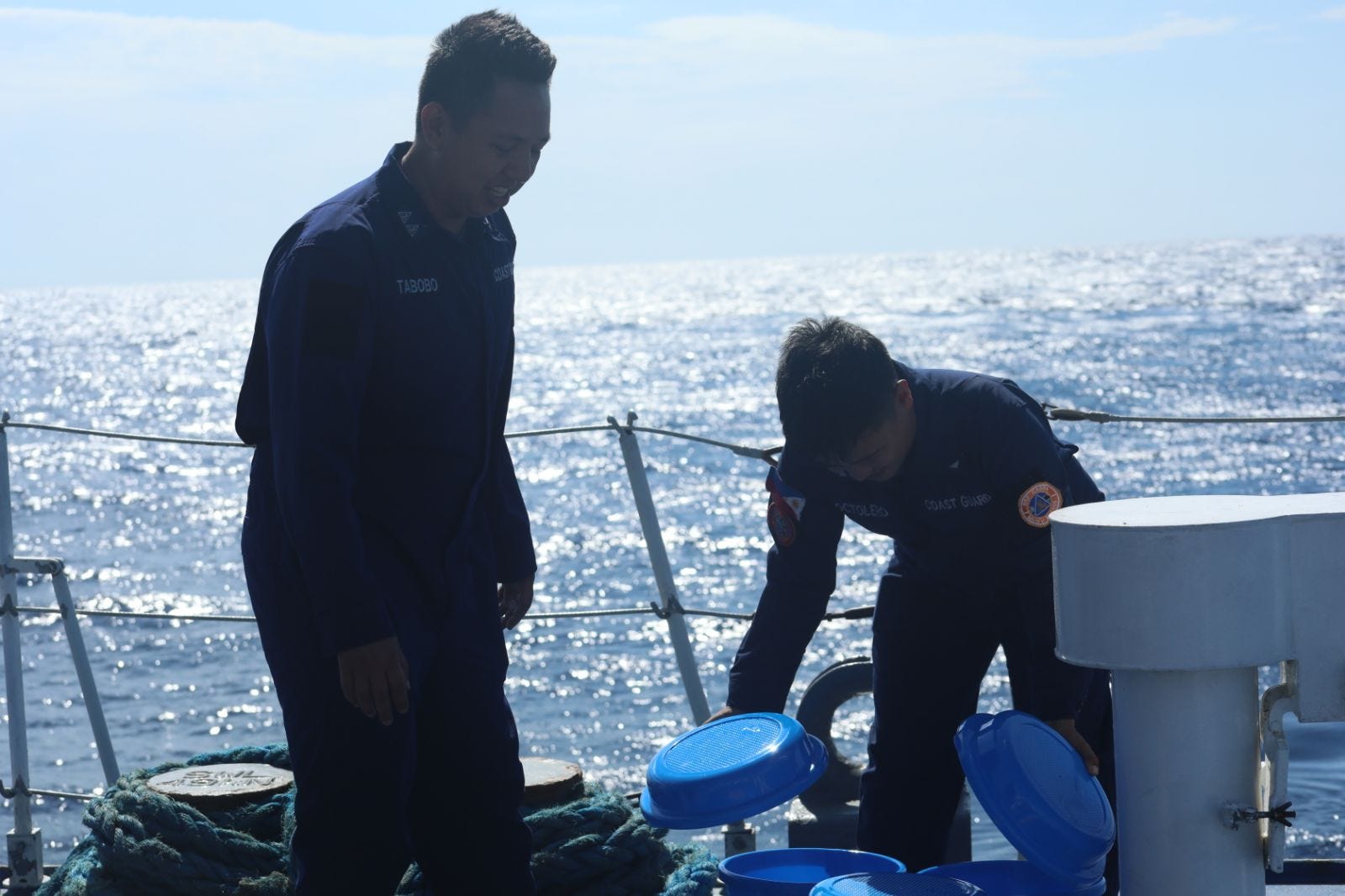
Philippine Coast Guard personnel provided aid to fishermen in Zambales during maritime patrols last March 13, 2026. Photo from Philippine Coast Guard.
Manuel Mogato | March 17, 2026
Manila — The Philippine government implemented measures to reduce fuel consumption as the Middle East conflict entered its third week, impacting global fuel supply and prices.
However, a senior naval flag officer assured the military’s maritime operations in disputed waters in the West Philippine Sea will not be affected.
Rear Admiral Roy Vincent Triniadad said only administrative tasks and functions would be affected to conserve fuel consumption.
He did not specify what activities would be affected
“I would like to say that sovereignty has no price. Our patrols in the West Philippine Sea are not affected,” said Trinidad.
“Our patrols, our operations will continue because this is our mandate. And again, there is no price for protecting our sovereignty,” he added.
Trinidad said the planned military activities and exercises with like-minded nations will continue. (Also read: ASEAN calls for cessation of hostilities in the Middle East)
“There are no indicators that there will be a reduction in the training and exercises,” he added.
A Philippine Navy ship, BRP Diego Silang, is proceeding to Australia to participate in the Kakadu 2026 exercise and the International Fleet Review this month.
The Navy said the two events are “designed to enhance multilateral maritime cooperation, strengthen capabilities on humanitarian assistance and disaster relief, search and rescue, and develop interoperability between allied navies.”
“More military exercises are coming up for this year, and unless there are drastic changes, all of these have been planned, have been pre-planned and pre-approved, they will be executed,” he added.
