


Photo from ICC-CPI
Manuel Mogato | February 28, 2026
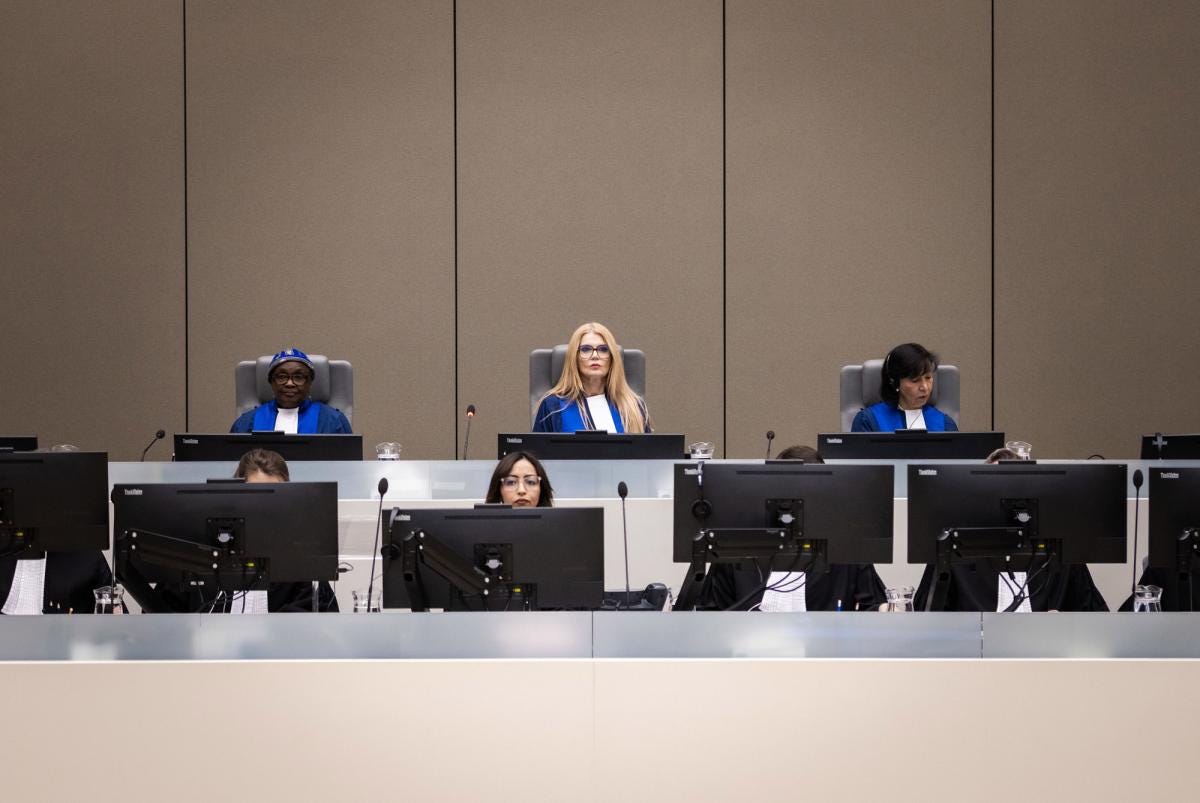
The Hague — The International Criminal Court’s Pre-Trial Chamber I started deliberations on the case of former Philippine president Rodrigo Duterte after four days of case presentations by both the prosecution and defense panels.
The Pre-Trial Chamber I has up to 60 days to decide whether to proceed with Duterte’s case to trial or dismiss it after the confirmation hearings last month. The court can also remand the case to the prosecution for further investigation.
Duterte, who was in power from 2016 to 2022, faced charges of crimes against humanity for murder and attempted murder in connection with his war on drugs policy.
The Philippine National Police (PNP) said it had killed more than 7,000 people in self-defense in legitimate anti-drugs operations. However, human rights advocates said the killings reached more than 30,000 from 2016 to 2022.
Duterte was also blamed for hundreds of killings when he was mayor of Davao City from 2011 to 2016.
The ICC was only prosecuting the killings that happened between November 2011 and March 2019, when the Philippines was still part of the Rome Statute.
The prosecution selected only 78 individual cases of killings to represent thousands of deaths, including the death of a 17-year-old schoolboy and two local officials in central and southern Philippines.
During the confirmation hearings, the prosecution panel laid out its case, showing Duterte had personal knowledge and direction in the killings.
It cited “insider witnesses” and Duterte’s own words in numerous speeches and testimonies in the Philippine legislature.
The prosecution also detailed the involvement of Duterte’s eight officials who helped the former president carry out the killings, including two sitting senators, three former police generals, and a lawyer who served as justice secretary
The defense panel argued there was no “smoking gun” evidence, and the former leader’s speeches were taken out of context and were just hyperbole.
A lawyer for the victims’ families was also allowed to argue his case, convincing the ICC to proceed to trial, saying it would be a mistake to end the proceedings because justice would be denied to thousands of victims.