

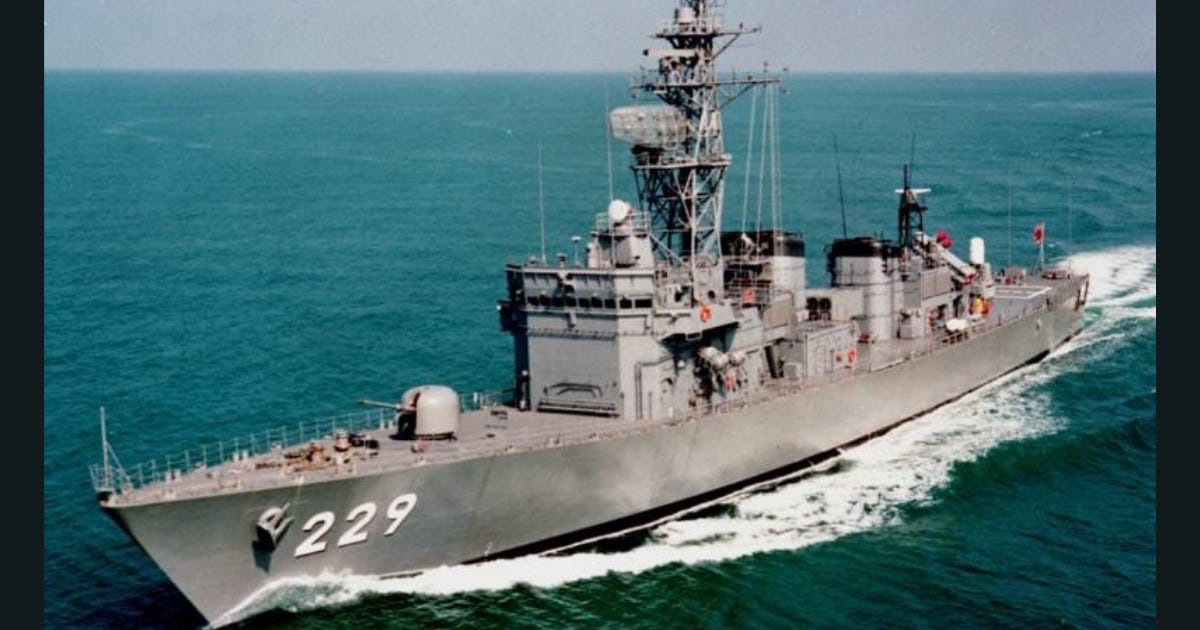
An Abukuma-class destroyer. Photo from seaforces.org
By: Manuel Mogato | Published: July 15, 2025
Reading Time: 4 minutes
Manila – The Philippines has announced it is in talks with Japan to transfer six old destroyer escorts it planned to mothball in 2027.
Tokyo has been replacing its more than three-decade-old Abukuma-class anti-surface and anti-submarine warfare (ASW) vessels with Mogami-class stealth frigates, Vice Admiral Jose Espeleta said in an interview with journalists.
The Japanese Maritime Self-Defense Forces have six destroyer escorts built between 1989 and 1991. It was planned to make 11, but only six were completed. Five were later cancelled.
In a statement, the Philippine Navy said it is discussing with its Japanese counterpart the joint inspection and evaluation of the destroyer escorts’ seaworthiness before deciding to accept them.
“This planned inspection forms part of exploratory discussions on the possible transfer of these naval assets to the Philippines,” the Philippine Navy said.
“Designed for anti-submarine and anti-ship warfare, the Abukuma-class destroyer escorts are known for their reliability and versatility, which align with the Philippine Navy’s operational requirements in protecting the country’s maritime domains.”
Subscribe to the API Newsletter
Bite-sized updates sent straight to your inbox.
Success!
First Name
Last Name
By signing up, you agree to our User Agreement and Privacy Policy & Cookie Statement. This site is protected by reCAPTCHA and the Google Privacy Policy and Terms of Service apply.
For his part, Defense Secretary Gilberto Teodoro Jr said the Armed Forces will study whether the Japanese vessels will fit into the navy’s logistics system and financial requirements.
“It will add to the fleet size,” Teodoro said, “But that will depend on whether we need to spend money for weaponizing it for interoperability, for secure communication.”
It is unclear if the Philippines will pay for the second-hand vessels, but naval sources said Manila will have to pay for the ships’ refurbishment.
Under Japanese law, it was not allowed to export military equipment unless it was for search-and-rescue, humanitarian, or surveillance equipment.
Thus, it will remove the anti-submarine warfare, missile system, and combat management system.
The Philippines may have to install its South Korean-made C-Star anti-ship missile and combat management system.
Defense experts said the six Japanese Abukuma-class vessels would be a stopgap measure as the Philippines builds a minimum credible defense capability.
The Philippines has only two stealth frigates, a former South Korean Pohang-class corvette, three former US Coast Guard Hamilton-class cutters, three former British Royal Navy Peacock-class corvettes, and nine Israeli-made fast attack interdiction craft.
It has ordered two corvettes and six Offshore Patrol Vessels and the six second-hand Japanese destroyer escorts would be an addition to its growing fleet.
It is also unclear what the Japanese will ask in return for the warships, although it would gain enormous political goodwill as the two countries’ security ties deepen and broaden.
Last year, the two sides signed a Status of Forces Agreement (SOFA), known as the Reciprocal Access Agreement. Both legislatures had ratified the pact.
In March, the Japanese Defense Secretary Gen Nakatani proposed to US Defense Secretary Pete Hegseth a “one-theater concept” for US and Japanese forces to operate in the region.
That means that Japanese air and naval forces can operate not only in the disputed East China Sea but in the South China Sea and Korean waters.
The second-hand ships’ transfer could be linked to the Japanese proposal since the vessels were designed to withstand a temperate climate, and the Philippines needed more platforms to join maritime patrols in North Asia.
The post Japan plans to transfer old vessels to the Philippines appeared first on asiapacificinsights.com.