

Khiew Labchan, a 26-year-old Lao activist, disappeared in Samut Sakhon province on 15 September 2026 after facing harassment and death threats. He went missing before a scheduled interview with the UNHCR, amid suspicions that his disappearance may be linked to transnational repression, echoing past cases of Lao activists who have been forcibly disappeared, arrested or killed.
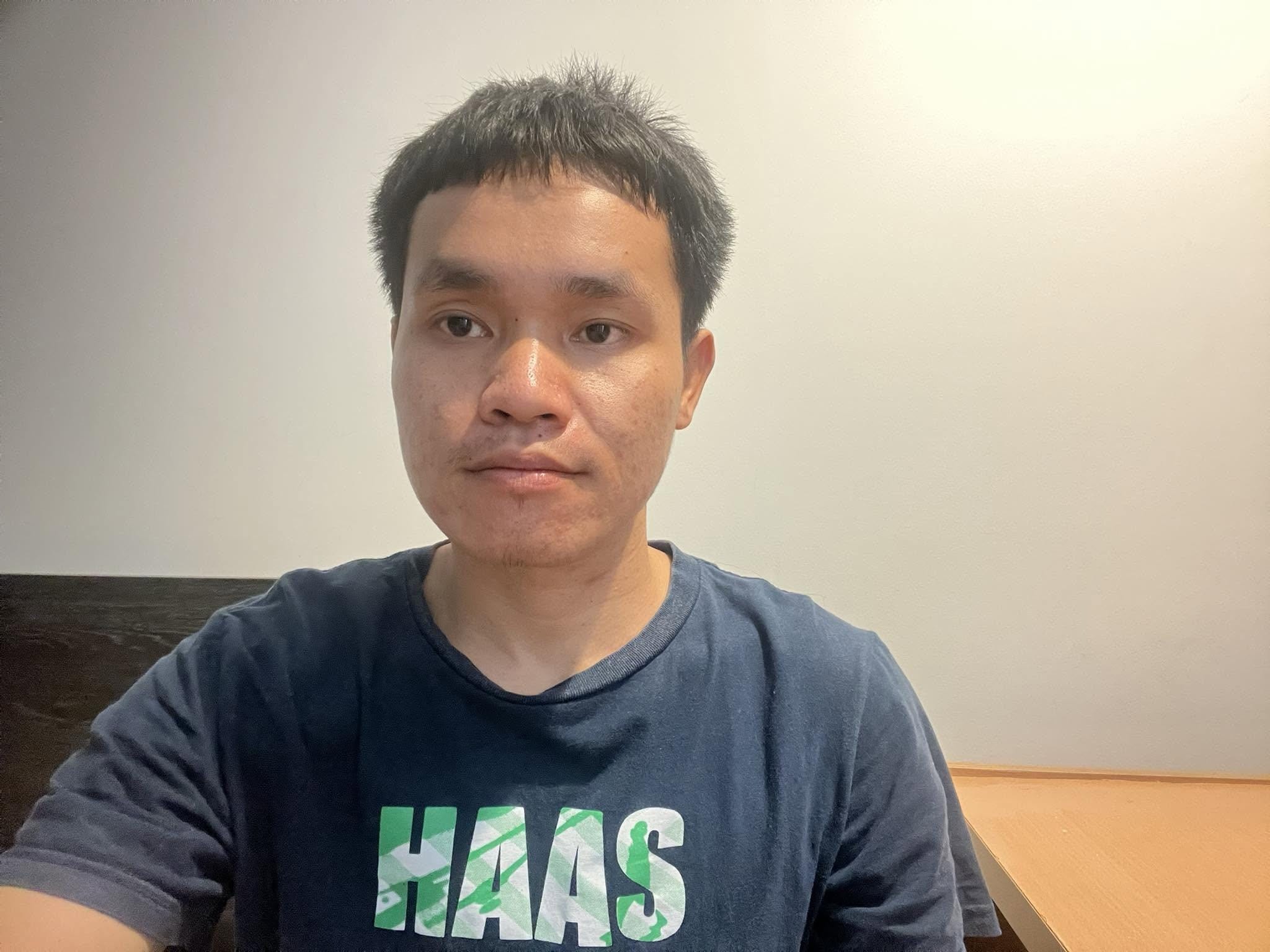
Khiew Lapchanh, a Lao migrant worker in Thailand who has publicly criticised the Lao government’s administration and the conduct of state officials. He was last seen in mid-September after finishing work at a restaurant in Samut Sakhon province. (Source: Khiew Channel)
Kaikham Lattanavong | November 12, 2026
THAILAND — On 15 September 2026, Khiew Lapchan, a 26-year-old Lao political activist, disappeared after finishing work in Samut Sakhon province, Thailand. He was last seen at around 2:21 a.m., amid concerns that his disappearance may be linked to transnational repression.
He had faced online harassment and death threats over his political comments about Laos. He was scheduled to attend an interview with the United Nations High Commissioner for Refugees (UNHCR) on 16 September to register his case, but failed to appear. To date, there has been no confirmed information about his whereabouts or what happened to him.
Activism
Since December 2025, Khiew had been commenting on political and social issues in Laos through his Facebook page, Khiew Channel. His following gradually grew to 158,000, making him known as a critic of the Lao government.
His online activism intensified and expanded in early 2026 after he spoke out about the case of Sisay Luangmonda, also known as “Bao Mor Khaen”, a Lao government critic who disappeared in February 2026 before reports emerged that he had died in a motorcycle accident in a forest. Before his disappearance, Bao Mor Khaen had criticised corruption and the abuse of power by state officials, similar to Khiew.
After that, Khiew faced systematic online harassment, including death threats, the disclosure of his personal information and attempts to locate him, the spread of false information, and campaigns to discredit him.
Dr. Bounthone Chanthalavong-Wiese, president of the Alliance for Democracy in Laos, told Asia Pacific Insights in October:
“Since early 2026, Khiew decided to reveal himself after seeing the assassination of Bao Mor Khaen. He could no longer tolerate it, so he spoke out about this issue, as well as other political and social problems in Laos where people are denied justice.”
She added that many young Lao people had begun criticizing the government because they were disappointed by the lack of freedom of expression.
Since 2017, Freedom House has classified Laos as “Not Free”, citing its one-party system and strict controls over freedom of expression, public movement and the flow of information in society.
Warning Signs Before Khiew Disappeared
Dr. Bounthone Chanthalavong-Wiese, president of the Alliance for Democracy in Laos, revealed that several videos threatening Khiew and telling him to stop his activism had circulated before he disappeared. There had also been attempts to locate him.
“I warned you, Khiew, but you did not stop. The Lao government said they would deal with him,” Dr. Bounthone said. She added that some videos had been edited to make it appear that Khiew had been beaten and was bleeding, even though he had only spoken out about social problems and injustice.
In addition, the Manushya Foundation had documented evidence relating to reports that an online reward of US$8,000 had been offered for Khiew’s murder. People who defended Khiew online had also been threatened, with reports that a reward of US$2,000 had been offered for their murder.
The death threats, offers of payment for murder and attempts to locate Khiew reflect risks that go beyond online harassment. They have raised concerns that he may have been physically harmed in Thailand, particularly as he was a public figure whose face was recognisable to many people.
These circumstances may constitute transnational repression, which refers to the harassment or use of violence against dissidents even when they are outside their home country.
Thailand currently has no specific legislation or international treaty obligations directly addressing transnational repression. However, there is growing recognition that foreign states should not be allowed to violate the rights of individuals on Thai soil, as this would constitute an infringement of Thailand’s sovereignty.
“Thailand does not have a specific law addressing this issue, but other relevant laws can be applied, such as provisions of the Criminal Code concerning physical assault and unlawful detention,” said Adisorn Kerdmongkol, a labour rights activist and coordinator of the Migrant Working Group.
He added that the Prevention and Suppression of Torture and Enforced Disappearance Act B.E. 2565 (2022) is also relevant to preventing transnational repression and cross-border enforced disappearances. However, its effectiveness depends on how the law is implemented.
Adisorn noted that the issue has gained attention through cases involving Myanmar and Vietnam over the past two to three years, while cases involving Laos are only now becoming clearer. He expects the issue to receive more attention in the future.
What Happened to Khiew?
On 14 September 2026, Khiew went to work as usual at a restaurant in Samut Sakhon province. Before his shift ended, a colleague took a photograph of him inside the restaurant.
He then walked out along the road. CCTV footage captured his last known appearance in the early hours of 15 September. No one has seen him since.
Dr. Bounthone Chanthalavong-Wiese revealed that the restaurant owner had received information that three men from Laos had approached the restaurant to ask Khiew about his work documents. She suspected that this may have been an attempt to find out where he worked.
“We think they may have been trying to find out where Khiew worked through those documents,” Dr. Bounthone said.
Khiew was scheduled to attend an interview with the United Nations High Commissioner for Refugees (UNHCR) in Thailand on 16 September to proceed with his request for protection and resettlement in a third country.
However, he failed to attend the appointment and lost contact with others. Dr. Bounthone suspected that his disappearance may have been linked to an attempt to prevent him from accessing the protection process.
To date, there has been no official confirmation of the cause of Khiew’s disappearance.
Previous Cases Involving Lao Activists in Thailand
In the past, several Lao migrant workers in Thailand who criticised their government have faced serious incidents, with some still unaccounted for to this day.
Od Sayavong disappeared in Bangkok on 26 August 2019 while he was a refugee registered with UNHCR. His case attracted the attention of human rights organisations and the United Nations.
Phetphouthon Philachan, who worked in Thailand, disappeared in Laos in November 2019 after crossing into Vientiane to attend to personal matters.
Somphone Phimmasone, Nang Loddham Thammavong and Soukhan Xayathat were arrested after returning to Laos and sentenced to lengthy prison terms in 2016 on charges related to expressing their opinions online.
Bounsuane Kittiyano, a pro-democracy activist and UNHCR refugee cardholder, was shot dead beside a forest road in Si Mueang Mai district, Ubon Ratchathani province, on 16 May 2023. He had worked with Khoukham Keomaneevong, an activist from the Free Lao group, who had already fled to Canada in 2022.