


COL Dencio S. Acop (Ret), PhD | August 12, 2026
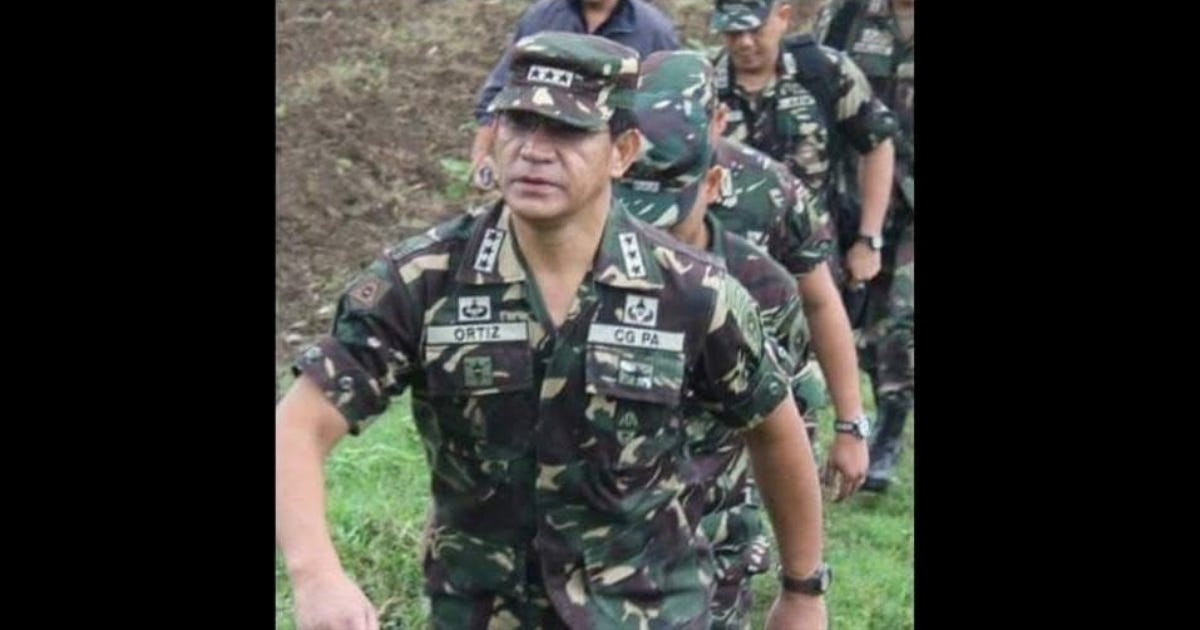
The story of Medal of Valor winner, Lieutenant General Arturo B. Ortiz, begs for re-telling in today’s landscape sorely in need of virtuous heroes. His life is the stuff of legend so baffling against the backdrop of today’s wholesale waiver of traditional values in favor of mindless greed and self-centeredness, and because it’s true. A reader of his story finds a chivalrous knight in shining armor who navigated through the challenging struggles of life scathed but undiminished due to the strength of his character amidst a tempestuous sea. He reads about the magnanimous character of a true leader who remains selfless and humble despite his achievements and the tempting allure of a worldly dominion.
The conviction of his refusal to accept what is rightly his for the taking should have put to shame ambitious hypocrites to such throne encouraged by the acquiescence of pretentious powers. Even more so, it would have served its worldly purpose other than idealism had the entire system of public administration and governance witnessed it gotten the clue and changed course before the ship of state ran aground, or worse, sank. A gallantly courageous leader who has proven himself in countless battles against the enemy, Ortiz’s qualities as a leader are truly rare.
Because he is the rarest among men, he is precisely the kind of leader who should have been put increasingly in charge of the nation’s affairs. And the signs of the times called for such intervention. His consideration to become the Chief of Staff of the Armed Forces of the Philippines (AFP) happened at a time when Colonel George Rabusa blew the whistle on massive corruption within the military establishment which ultimately led to the death of former AFP chief General Angelo Reyes. Reyes, a holdover from the Estrada regime he helped oust in EDSA 2, was among 12 AFP chiefs President Gloria Arroyo appointed during her 9-year presidency in what has become known as the infamous “revolving door policy” to prevent the military from also ousting her from power. Such self-serving policy, which saw one AFP chief serve a mere 3 months in office, further politicized the Philippine military in a way that the top man in uniform could not institute meaningful programs to advance the AFP organization, but only to lay beholden to his appointing politician.
Perhaps, it was such writing on the wall which convinced Ortiz not to accept the top AFP post from President Benigno Aquino III in 2011. But while other ambitious officers were falling all over themselves to be considered a contender for the top post, here was LT GEN Ortiz who simply said “no.”
Ortiz’s own words betray this sentiment. In his farewell speech at the Philippine Military Academy where he began his career, General Ortiz said: “Here, I learned that honor is above anything else. That in matters of honor, one must be ready and willing to risk and sacrifice everything, his career and even his life, just to keep his principles alive and honor intact.”
But there is no other public servant who would have been able to save the soul of Philippine public administration and governance than the likes of General Art Ortiz. Such public concern must have been in the mind of Ortiz when he politely refused the offer, stating that he himself needed more time to follow-through with his reform programs as commanding general of the Philippine Army. But the man who eventually got the top AFP post had just about the same time left as Ortiz before mandatory retirement set in. A greater appointing power would have shared this ideal wish enough to act on it for the greater good. But it would now seem too much to ask of one who appointed merely mediocre but familiar officers to top posts in the security services and one who, in plain view, let his commando troops be massacred and mutilated by separatist rebels for reasons rationally unknown.
But had Aquino made Ortiz the AFP chief anyway, some of the following positive developments just might have happened: By appointing the most competent and deserving officer to the top AFP post, that would have made it clear to the rank-and-file that meritocracy and the culture of excellence were the rule and not the exception in the defense establishment. Such a gesture from the President based on outstanding performance would have boosted the morale of the men and women in uniform encouraging them to do the same. It would have also countered the negative image of the military which is perceived to suffer from a culture of corruption, favoritism, and mediocrity.
Lastly, institutionalized reforms in the AFP, beset by successive coups in the past, are continuing and being pursued by no less than its commander-in-chief. The wisest of Filipino seers would have seen that the future of a country like the Philippines lies in gifted individuals who refuse power, because it is precisely this refusal which illustrates a selfless character and destines them for greatness. They would have realized that it is exactly such unselfish and courageous individuals who should be entrusted with the power and authority to advance the nation’s interests more than the ambitious and self-centered. Moreover, these wisest of elders would have realized that such gifted leaders must be enabled to serve sufficient time in office to sustain relevant programs that reform and develop much-needed institutions like the military.
Nonetheless, let me re-tell the story of Arturo B. Ortiz that the soldiers of tomorrow should be inspired by his legacy and the soul of a nation rekindled by the realization that no amount of policy formulation and implementation would suffice if these were not led by men of honor.
Ortiz came from very humble beginnings in the Acupan mines of Itogon, Benguet where his father was a foreman at the mines. Despite their poverty, Faustino Ortiz Sr. was an honest man, and he instilled the virtue of honesty to his five children with Euprefecia, Art’s doting mother. Art, the second son and child in the family, learned the values of honesty, humility, hard work, and perseverance from his parents, especially his father. Faustino never had any record of stealing gold from the mines even if other miners did it. He valued honesty and integrity so much that once when he found a sack of gold ore, he surrendered it, instead of keeping it for himself.
Despite his many chores, Art never neglected his studies. Classmates in school remembered him as this smart and good-looking but silent boy. Art liked to read and went with one or two friends who shared his passion for reading and keeping away from vices. He didn’t really plan on becoming a soldier at first. Art enrolled in engineering at Saint Louis University in Baguio working part-time in a silversmith shop. By then, his father had already retired, and they lived in nearby Pangasinan where Faustino had bought a piece of land from his retirement savings. But, as destiny would have it midway through his engineering studies, Art took the entrance examinations into the military academy also located in Baguio and passed joining the class of 1979. The army became Art’s branch of service, while other classmates joined the constabulary, navy, and air force.
General Ortiz has had an outstanding military career since his graduation from the Philippine Military Academy in 1979 until his retirement from active-duty service in 2011 as the 53rd Commanding General of the Philippine Army. Just to footnote some high points in his career, Ortiz is a recipient of the Philippine military’s highest decoration – the Medal of Valor – as well as 3 Gold Cross Medals and several Military Merit Medals with Bronze Spearhead Device, all combat awards. He spent a meaningful number of years with the Army’s Special Operations Command units as a Special Forces officer.
Apart from his local training, he took specialized courses at the John F. Kennedy Special Warfare Center and School at Fort Bragg, North Carolina as well as the General Staff course at Fort Leavenworth, Kansas in the United States. His name is among those listed in the hall of fame of international graduates at Fort Leavenworth. Reading the citation narratives of his awards is the stuff of legend, like watching an action-packed war movie, except they are all true and they happened for real! (Also read: Character Leadership Matters: West Point and My Leadership Journey)
Let’s begin with Murcia where Ortiz won the Medal of Valor. When Ortiz won this topmost award, he was still alive. This fact deserves mention because most MOVs have been won posthumously and defensively. Ortiz won his award through the employment of the offense. Murcia, Negros Occidental in 1990 was a stronghold of the Communist Party of the Philippines / New People’s Army (CPP-NPA).
Acting on intelligence reports, Captain Ortiz led the 606th Special Forces Company, which he commanded, along with CAFGU paramilitary elements on an attack of a suspected CPP/NPA training camp in the hinterlands of Murcia. It took an 11-hour cross country march and scaling of a 1,000-foot cliff to reach the suspected target.
Outnumbered 4 to 1, isolated and with minimal hope of reinforcement, only the element of surprise capped by steely courage, combat skills, accurate firepower, and outstanding leadership could have turned the tide in favor of the government troops – which they did on that day! The rebels in the camp were completely surprised and panicked. Around 300 of them took off in every direction trying to seek cover while they were mowed down by Ortiz’s organized attack. Ortiz led fire and maneuver from the front, moved from one team to the next, fixed a jammed M60 machine gun, tossed killed enemy firearms to his men, and assisted women and children to safety. When the dust settled after a 2-hour firefight, 84 NPA rebels lay dead, with several others wounded. Eight rebels surrendered, while 105 others were reported missing by the NPA’s Negros Regional Party Committee. The enemy training camp which held 28 huts was captured. The only casualty on the government side was one wounded soldier.
Just some 4 months following this encounter with the enemy, the 606th again engaged the NPA in Sitio Ligawon, Barangay Mailum of the same province, killing 11 rebels and wounding several others in a firefight which lasted an hour. While the unit captured the 14-hut rebel base, it also suffered 2 wounded soldiers. Ortiz was awarded the Gold Cross Medal for the successful mission.
While the April 1990 Murcia operation seemed flawlessly executed, the efficiency and effectiveness of the 606th SF Company under Captain Ortiz were, in fact, gradually developed over several missions preceding Murcia. Some 6 months before, in October 1989, the 606th encountered NPA rebels in a 45-minute gunbattle again in Barangay Mailum, Negros Occidental which saw 12 rebels killed and 2 others captured while the 606th suffered no casualty. Ortiz again won a Gold Cross for leading this operation. The successive encounters experienced by the 606th in the areas of Negros Occidental manifest how the province was indeed a stronghold of the NPA in the late ‘80s to early ‘90s. The deployment of the 606th to the NPA-infested area also illustrated how the government sent its best units to the most contested hotspots throughout the archipelago.
Before the unit’s deployment to the Western Visayas, the 606th saw repeated actions against the NPA in Northern Luzon. Led by a leader who sought combat, not wait for it, the 606th was undoubtedly among the fightingest units in the AFP.
In January 1988, Ortiz led Team Alpha of the 606th in reinforcing the 45th Infantry Battalion against an attack by 200 NPA rebels in Piddig, Ilocos Norte. His team, which suffered no casualty, engaged and pursued the enemy killing 2 NPA rebels and wounding several others in a 4-hour gunbattle. Later in August of that same year, the 606th again encountered 2 separate groups of NPA fighters just a day apart killing 3 rebels at Barangay Reba in Cabugao, Ilocos Sur. Four months later in December, the 606th pursued rebels who ambushed elements of the Abra Provincial Command at Lacub and Licuan, Abra inflicting an undetermined number of casualties upon the enemy.
The unit rescued 3 Philippine Constabulary soldiers pinned down by enemy sniper fires near a creek. Just 2 months after this encounter in February 1989, the 606th raided a rebel hideout at Cacapean, Marcos, Ilocos Norte but found the 22-hut enemy camp already abandoned. It took the unit 2 nights traversing difficult terrain before reaching its target. Through all these operations, Ortiz led from the front and directed all actions of his men.
General Ortiz was a man who literally epitomized the motto of his Alma Mater: Courage, Integrity, Loyalty. Not only did he exhibit courage through the wars on the battlefields he fought in. He illustrated it through the life he lived outside of them as well. He had the courage to say “no” to corrupt practices. When he assumed the top post in the Philippine Army, he not only made sure the army missions were accomplished, but that the morale and welfare of the men and women of the army were allocated the maximum resources possible from the army’s budget.
As Commanding General of the Philippine Army, PA, Ortiz made sure the resources of the army were utilized efficiently and effectively according to proper prioritization. During his tenure, army camps and the installations within them including and especially hospitals and medical/dental facilities were upgraded and improved. An American ally who was used to visiting Fort Magsaysay in Nueva Ecija said in jest that he could not recognize the camp and thought it was a different one! He visited every army unit in the field risking personal safety to do so. In one of such visits, the helicopter bearing him and his party crash-landed. But he never allowed such mishaps to deter him. Never one to be enticed by pomp and ceremony, which he considered wasteful of scarce public resources, General Ortiz refused extravagant spending planned for his retirement ceremony nor the deployment of war assets just to be paraded in his honor.
Ortiz’s integrity has been transparent through his career and personal life. Married over forty years, the general and his wife, Dr. Cynthia Ortiz, have seven sons together two of which have followed in their father’s footsteps. Today, he is also a grandfather to four grandchildren. Fiercely loyal to duly constituted authority, Ortiz has never gotten himself involved in any coup attempt against the government even when he was enticed to do so by military rebels in the ‘80s.
I’ve had a few encounters with Sir Art when our times in uniform intersected. The 4th Special Action Company of the Philippine Constabulary Special Action Force, which I commanded, got deployed to the Ilocos Region around the same time that Captain Ortiz’s 606th Special Forces Company did. A 200-strong NPA rebel unit that ambushed the 45th Infantry Battalion and chased by the 606th was probably the same one that likewise ambushed our company at Piddig, Ilocos Norte in January 1988. Both our units were, at one time or another during that deployment, logistically supported by my late cousin, PC Lieutenant Colonel Romeo Acop, who was then the Ilocos Norte Provincial Commander.
During the Armed Forces Day celebrations in December 1990, we both had the honor of standing side by side before we each had to walk up the platform to be personally congratulated by President Corazon Aquino. We were both awardees along with several others (General Rodolfo Biazon included) – him the Medal of Valor, of course, and I the Distinguished Conduct Star; Him for leading the offense against NPA rebels in Murcia, and I for leading the defense against military rebels in Camp Aguinaldo, both within the previous year. Before the awarding, Sir Art spent time in our home to change into his uniform. Thereafter, there were times I’d catch a glimpse of him while I traveled with Defense Secretary Fidel Ramos during his regular visits in the field.
We are both from Baguio attending high school and the college of engineering at Saint Louis University before entering the PMA. But Sir Art was four years ahead of me so our presence there or at the academy didn’t intersect. Nevertheless, I knew about him.
“Baguio Beans”, as we highlanders were called supposedly for our endurance in running up “cardiac hill.”
While I lived up to that moniker as running seemed to be the only sport I was good at, Sir Art excelled in boxing, wrestling, and Arnis at the academy.
Speaking before the cadets at his alma mater, General Ortiz was reflective and candid. He told the future officers that “there is really no bad unit, only a bad commander.”
By saying thus, the general edified the Filipino soldier as obedient and willing to risk everything trusting that the command of his superior is always in furtherance of the assigned mission. Describing the soldiers he saw and worked with in the field, Ortiz added that: “They will ask nothing from you except your leadership that will command their respect, loyalty, and obedience.”
Truth is that he felt most comfortable being in the company of his men. He loved his men and felt at home in their simplicity of life. Perhaps, it was being among them where he encountered the most truth – the simplicity of true friendship tested by the possibility of experiencing life or death together for a worthy cause. On the other hand, Ortiz echoed that the responsibility and accountability of command always lay squarely upon the shoulders of officers, especially the commanders.
His advice to the future officers equally applied to all officers, present and past. He said: “Don’t be misled in equating officer-ship with leadership. I say this because I have come across a lot of officers, including ‘Peemayers’ (PMA alumni), who have miserably failed to lead their men and accomplish their unit mission, thus a failure of four years leadership training here at PMA.”
In short, he was saying that many officers feel entitled to merely being such and no longer strive for excellence in their work as officers. Perhaps, the laxity in the system that is so prevalent in the local operating environment also has something to do with it. He warned the cadets that leadership began while they were still at the academy and that they shouldn’t wait until they graduate to begin practicing it. He said: “Sa maniwala kayo o hindi, kung shabby ka ngayong kadete ka pa lang, chances are, shabby ka pa rin kapag naging opisyal ka na.”
(Believe it or not, if you have been a shoddy cadet, then chances are, you will still be shoddy as an official.)
While the outside operating environment has inherent imperfections and daunting challenges, Ortiz, by the strength of his own performance record, admonished that: “It is not true that you will have to compromise ideals and values (imbued at the academy) with those of the world outside. The discipline, integrity, uprightness, and professionalism imbibed in you here in the Academy are the same ideals that make you different from the rest; the same ideals that will spell the difference.”
In dealing with the frustrations of the service that at one time made him consider leaving, he shared that each one can only draw from his own personal convictions and motivations that truly mattered to him. He said: “In my experience in soldiery, I realize that the biggest enemy is not in the battlefield but is within you.”
Perhaps, he was also referring to the spiritual warfare that continually rages on within each one of us in the quest to do what is right as opposed to what is wrong. While he remained idealistic, he too was a realist who understood the complexities and challenges of the larger operating environment.
He possessed a kind of inner peace which he drew from in times of extreme adversity. There is something about men who are at peace with their inner selves, who feel that their moral values are infinitely more important than turning their backs on these just to please the outside world and pretend to be something they’re not. Ortiz has always been proud of his alma mater reminding fellow alumni that the eyes of the nation are upon them every step of the way through the course of the nation’s history.
In his own words, he said: “The military community, as well as our civilian counterparts, look up to us PMAers as models of excellence. The expectations are high and we must live up to these expectations, not just to uphold the prestige of our Alma Mater but also to set a high standard for ourselves. May God continue to bless our Alma Mater and its graduates.”
Through Philippine military history, graduates of the Philippine Military Academy have largely remained true to the values of their Alma Mater in their careers, especially during the Second World War. However, there have been others, as well, who compromised these values by their actions. For instance, there are some who got involved in coup attempts to remove duly constituted authority and illegally effect regime change. Some others followed and implemented illegal orders by rogue political leaders. There are alumni who’ve engaged in plain criminal behavior.
In today’s row against China, academy graduates are divided in their political sentiments which either oppose Chinese aggression in the West Philippine Sea or not. It seems both difficult and easy enough to react to the dilemma. Whatever the justifications, acquiescence to enemy behavior in what is clearly Philippine waters is cowardly to swallow and utterly disloyal to the nation. Yet, there are alumni of our prestigious institution who are unabashedly pro-China. Patriots who paid the ultimate sacrifice fighting the Spanish, American, and Japanese invaders as well as the Communist Terrorists in the Counter-Insurgency War and separatists in the South must be turning in their graves.
But, as the Venerable Archbishop Fulton Sheen said in his famous quote: “Judge the Catholic Church not by those who barely live by its spirit, but by the example of those who live closest to it.”
The same advice could be given to critics who like to pass judgement on the graduates of the Philippine Military Academy, or any other institution for that matter. Simply substitute the name of the academy for the “Catholic Church.”
I am certain that one of the names put forward in answer to that challenge would be that of Lieutenant General Arturo B. Ortiz. And in these times of great uncertainty and peril, our soldiers and leaders could most certainly use a model soldier and leader to emulate.