

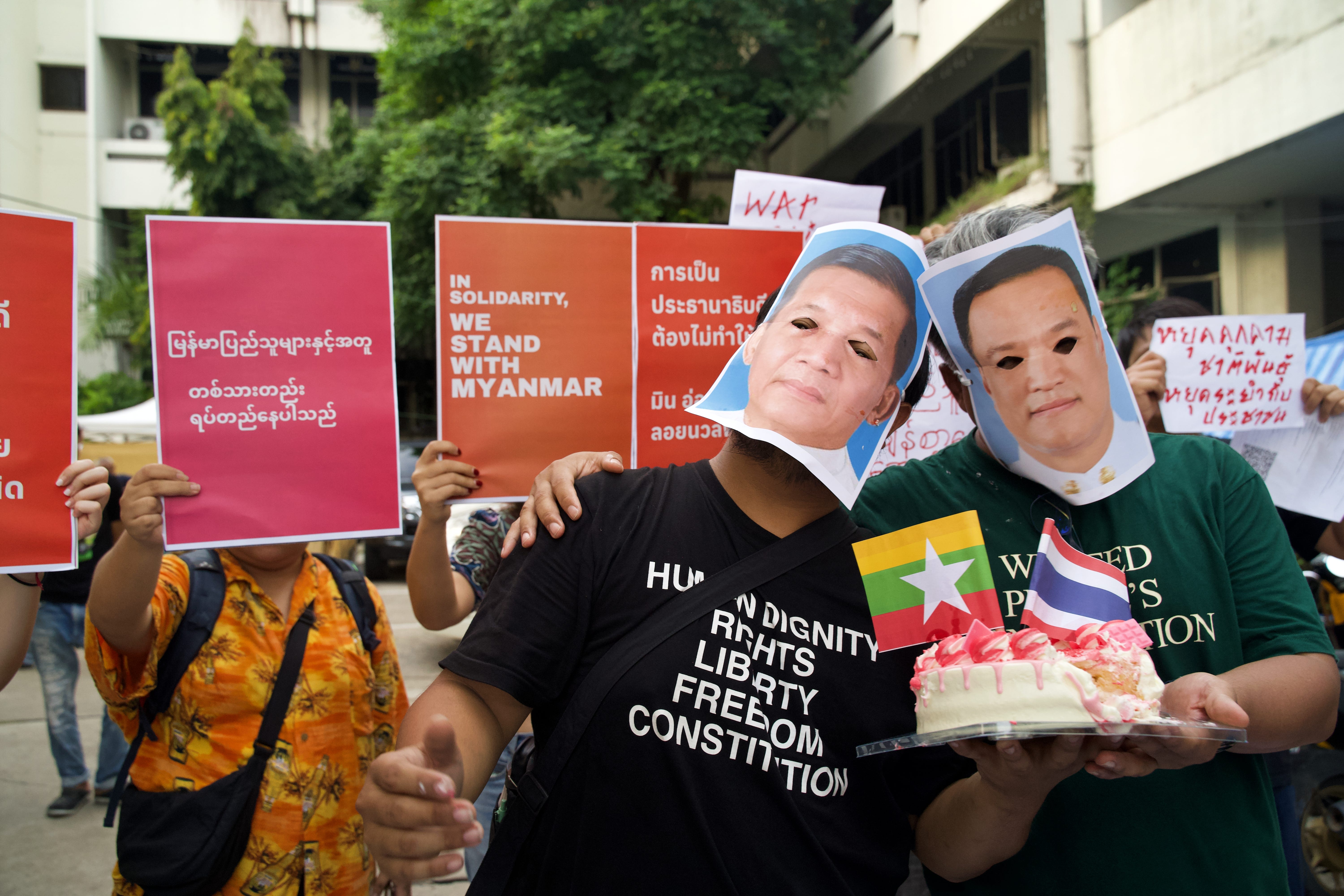
A network of activists and civil society organizations in Thailand staged a symbolic protest by expressing opposition to the Thai government’s decision to welcome and strengthen ties with Min Aung Hlaing. (PHOTO: Courtesy of Nathaphob Sungkate, August 6, 2026)
Kunravee Sukhimoke | August 10, 2026
BANGKOK — Elected Myanmar’s president in April, General Min Aung Hlaing went on an official visit to neighboring Thailand last week to meet Thai Prime Minister Anutin Charnvirakul.
This was the general’s second visit to an ASEAN country, after Laos. He also had important trips to rival powers India and China.
The series of high-profile visits sought much-needed recognition for Myanmar leaders’ political legitimacy after the 2021 power grab, according to Associate Professor Dr. M.L. Pinitbhand Paribatra, a member of the Faculty of Political Science at Thammasat University.
“The most important thing is that Myanmar likely wants international political recognition, particularly from neighboring countries, which have the closest interests, and the fact that Myanmar can visit all four neighboring countries is also a way of creating a balance to prevent the influence of countries outside the region,” he said.
In the case of Thailand, Pinitbhand said the visit reflects Myanmar’s desire to ensure that Thailand will not provide space for groups opposing the Myanmar government to use Thai territory as a base for their activities. (Also read: Is Thailand Bridging the Gap between ASEAN and Myanmar or Lending Legitimacy to the Junta?)
“The influence of Western countries that may provide assistance to opposition groups... does not want the Thai state to provide an opportunity for opposition groups to interfere in its internal affairs,” he said.
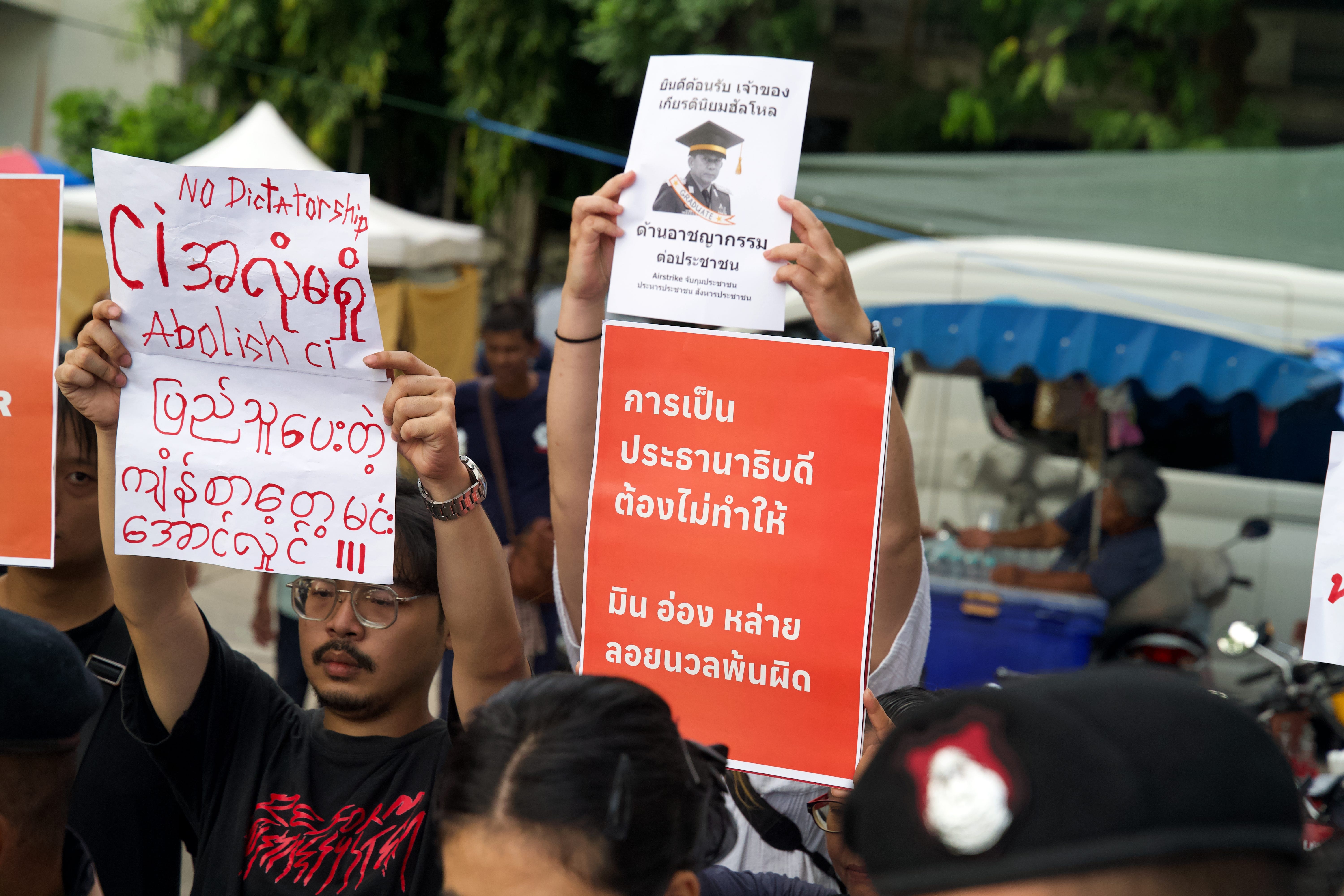
A network of activists and civil society organizations in Thailand staged a symbolic protest by expressing opposition to the Thai government's decision to welcome and strengthen ties with Min Aung Hlaing. (PHOTO: Courtesy of Nathaphob Sungkate, August 6, 2026)
On August 6, 2026, Thai Allied Committee with Desegregated Burma Foundation (TACDB) and its partners issued a statement condemning the Thai government over its reception of Min Aung Hlaing, calling on Thailand to uphold the rule of law, human rights and humanitarian principles, and not regard Min Aung Hlaing as a representative of the people of Myanmar.
Challenges to Peace in Myanmar
The ASEAN Five-Point Consensus provides a framework for addressing the political crisis and conflict following the coup in Myanmar.
However, Myanmar may not be able to implement the consensus in the near future. (Also read: ASEAN ministers set November deadline on Myanmar proposals)
“The violence in Myanmar is a deep-rooted rift that cannot be stopped immediately, especially after the 2021 coup, when the situation became more complex than it was 20–30 years ago,” Pinitbhand said.
However, he said stronger relations between Myanmar and its neighbors, including Thailand, China, India and Laos, could open new channels for dialogue and support the peace process, although there is no guarantee that they would end the violence. (Also read: India’s Highway to Thailand Hinges on a Peaceful Myanmar)
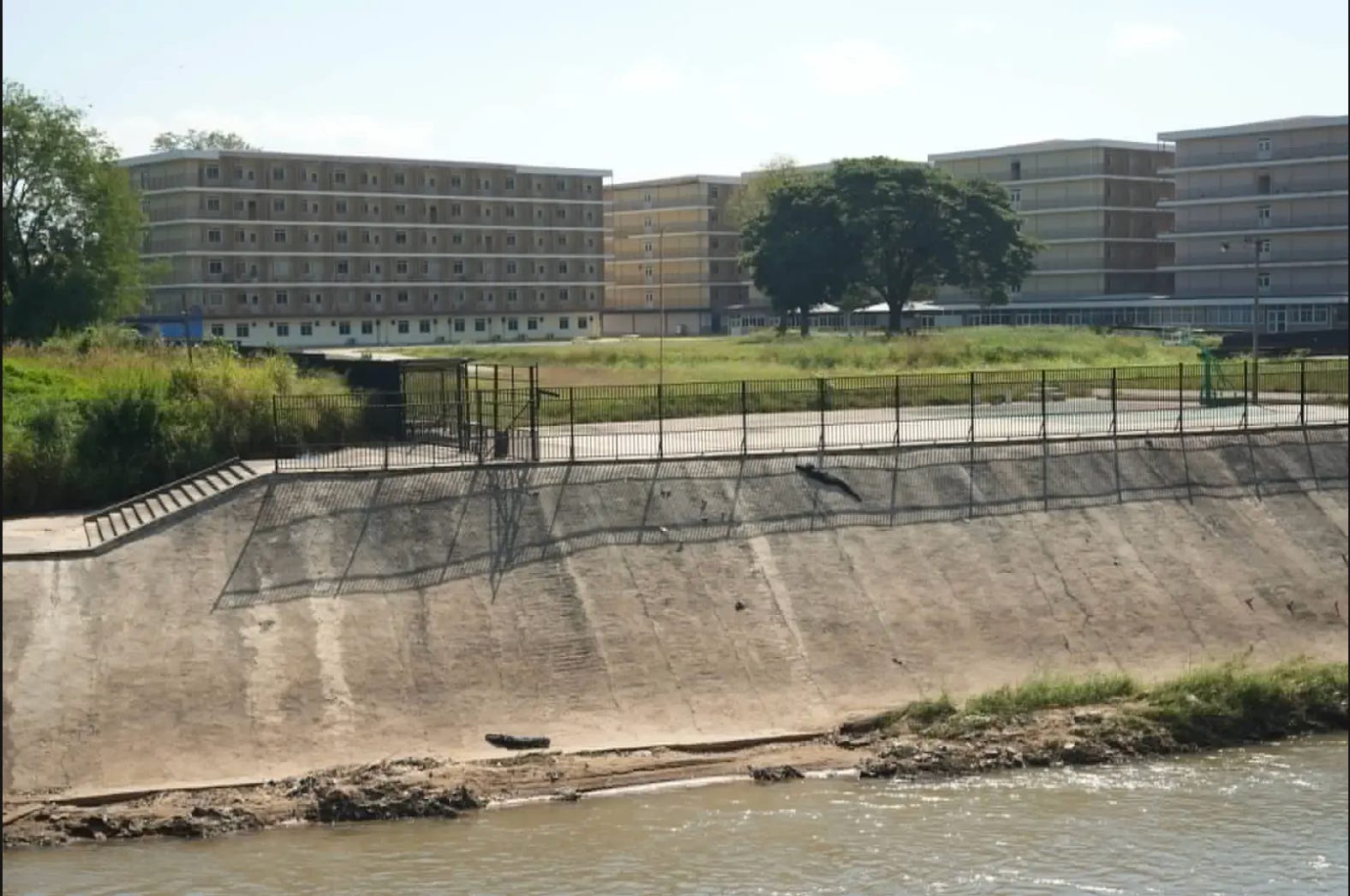
Myawaddy, located on the Myanmar-Thailand border in Karen State, is a notorious global hub for industrial-scale cyber scams (PHOTO: Courtesy of Donlawat Sunsuk, December 4, 2025)
For Thailand, the short-term priority should be to address the cross-border issues affecting the country, including scam networks, illegal migration, environmental problems and violence along the border.
Thailand should also encourage key actors from both countries to hold formal discussions.
The scam issue could see faster progress due to pressure from China. (Also read: Securing China’s ‘front door’: Peacemaking mission in mainland Southeast Asia)
As for the environmental concerns, particularly pollution and heavy metals in Shan State, this could provide an area for Thailand, China and Myanmar to discuss jointly.
Rethinking Thailand’s Approach to Myanmar
Siwawong Sooktawee of the Thailand Migration Reform Consortium said Myanmar’s civil war is likely to continue for a long time, and achieving peace will take time.
Thailand should therefore focus on managing the immediate situation to minimize its future impact on the country.
He said Thailand should not limit its engagement with Myanmar to government-to-government relations, as the Myanmar government does not have full control over the border areas.
Instead, Thailand should expand engagement at the local, community, ethnic group and civil society levels.
Local-level cooperation could help Thailand address cross-border issues, including population movements, haze pollution and transnational crime.
“Relations between local communities, and between ethnic groups that have close ties with border areas, could be more beneficial to Thailand,” he said.
Siwawong added that Thailand shares a 2,400-kilometer border with Myanmar, meaning that Thailand is inevitably affected, both positively and negatively, by whatever happens in Myanmar.
Therefore, building cooperation and relations at multiple levels could be another important way to reduce the conflict’s impact and help Thailand and Myanmar coexist more stably in the long term.
Thailand’s Evolving Policy Toward Myanmar Refugees
Pinitbhand said Thailand’s approach to refugees and migrants from Myanmar began changing in the 2000s, driven by political developments and labor demand. Under the Thaksin Shinawatra government, Thailand began bringing refugees and undocumented migrants into the formal system through registration and ID cards.
After the 2021 coup, the situation became more complex as violence drove different groups into Thailand, requiring the country to balance security and humanitarian concerns. (Also read: ASEAN sees positive development in Myanmar after ICRC met with Suu Kyi)
Thailand continues to provide initial assistance and return people when conditions allow, while introducing humanitarian measures such as the Humanitarian Corridor, a joint effort by the Ministries of Foreign Affairs, Interior and Defence to deliver aid into Myanmar.
In recent years, some refugees in camps have been allowed to register, work legally outside the camps and access education, while international organizations continue to assist with the camps. The approach reflects a growing balance between security, economic and humanitarian concerns.