

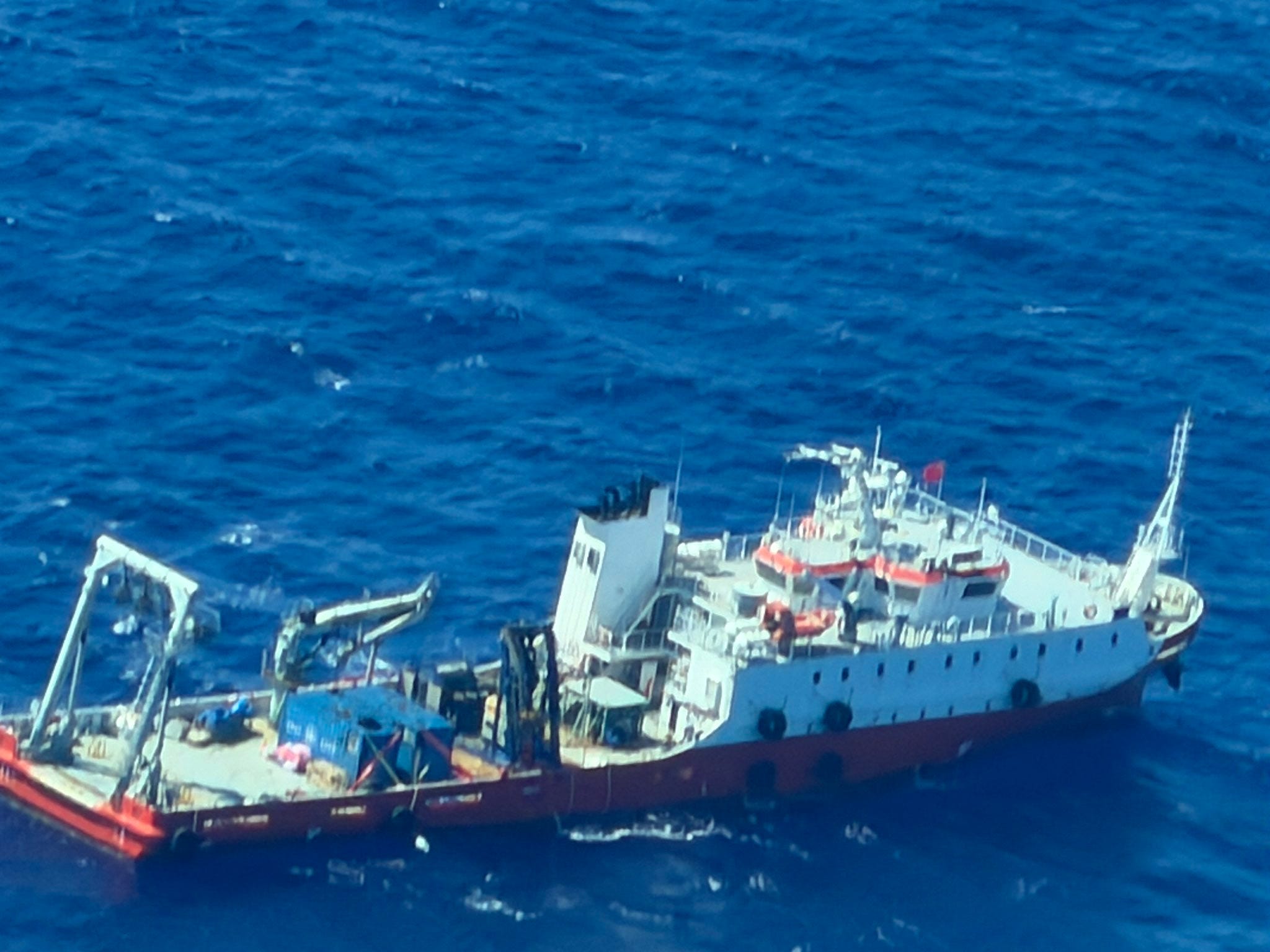
Chinese research vessel Jia Hai Ke 7 spotted 38 nautical miles off Itbayat, Batanes. Photo from Philippine Coast Guard.
Anna Mogato | September 28, 1016
MANILA — The Philippines dispatched an aircraft to drive away a Chinese research vessel (CRV) spotted near the country’s northernmost island, a Coast Guard spokesman said.
Rear Admiral Jay Tarriela said a Coast Guard monitoring station found Jia Hai Ke 7, a Chinese research vessel, about 38 nautical miles off Itbayat Island, conducting tests in the water where critical submarine cables were laid.
He said a Coast Guard light plane was sent to check the Chinese vessel and challenged it several times over the marine band radio. (Also read: Chinese vessel conducts one month research in Bajo de Masinloc)
“The CRV did not respond to any of the challenges,” Tarriela said, adding the aircraft repeatedly asserted the country’s sovereign rights and “demanded that vessel state its intentions and cease unauthorized activity.”
Coast Guard Commandant Admiral Ronnie Gil Gavan said the Chinese vessel is a private marine geological surveying vessel, and its Automatic Identification System (AIS) was turned off.
A Canadian satellite-based Dark Vessel detection tracked the vessel since it left a port in Xiamen on September 21. It later broadcast its location in Papua New Guinea, more than 2,000 miles from its real location. (Also read: Coast Guard scrambles aircraft and vessels as Chinese research ships stray into Philippine waters)
“The PCG assesses this as deliberate AIS spoofing to conceal the vessel’s true movements from Philippine authorities,” Tarriela. “Without the vigilance of the Itbayat monitoring station, its presence would have gone unnoticed.”
Tarriela said the rough waters off Batanes and the Luzon Strait are important, as they host critical submarine cable corridors linking the Philippines to Northeast Asia and the wider Indo-Pacific.
“A seabed-survey vessel hiding its position while holding station in this corridor raises serious concern over the security of the country’s undersea communications infrastructure and the potential military use of the data collected.”