


Manuel Mogato | May 20, 2026
MANILA — The Philippine Navy’s air warfare group has announced the acquisition of more anti-submarine warfare (ASW) aircraft to boost its maritime domain awareness capabilities in disputed waters as tensions rise with China’s increasing presence and activities in the West Philippine Sea.
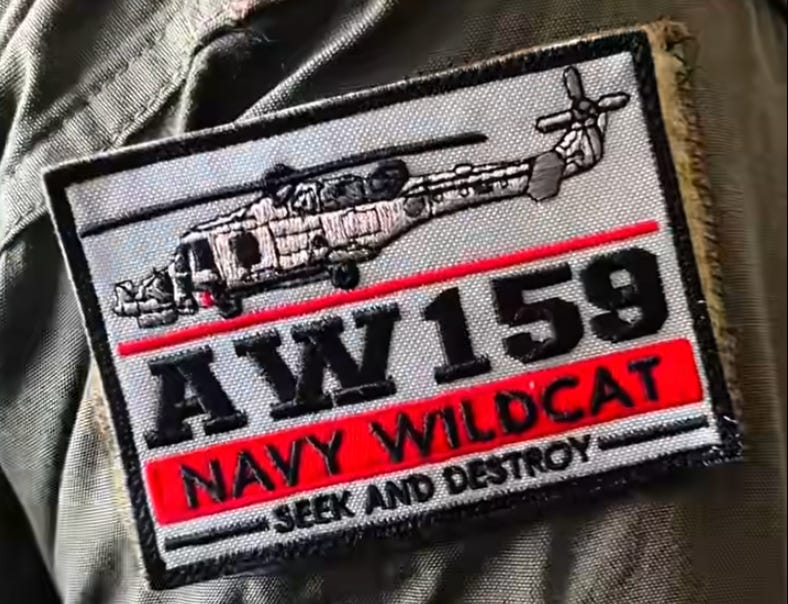
The head of Naval Air Warfare Group, Navy Captain Ariel Joseph Coloma said at least six additional AW-159 anti-submarine helicopters will enter service in the next four to five years.
Coloma said the six new aircraft will be deployed on the four guided-missile frigates and six offshore patrol vessels, including four due for delivery. (Also read: Philippines get second Offshore Patrol Vessel from South Korea)
“The AW-159 Wildcat helicopters are full ASW-capable helicopters so they can detect, identify and prosecute subsurface targets.”
The Navy has two AW-159 helicopters assigned with two guided-missile frigates.
“In fact, they have already joined missions and exercises with our fleet forces in the different parts of the archipelago,” Coloma added.
The Navy may need more anti-submarine helicopters to fully equip its surface combat force.
The Navy’s fleet commander, Rear Admiral Joe Anthony Orbe, said the delivery of four more offshore patrol vessels will further enhance the conduct of maritime patrols in the West Philippine Sea.
“The four will be arriving by 2028,” Orbe said in a news conference, referring to the vessels to be delivered by South Korean shipbuilder, HD Hyundai Heavy Industries.
Two OPVs have been delivered, part of the 30 billion peso contract for six vessels.
The second OPV, BRP Rajah Lakabdula, will be commissioned late this month during the Navy’s 128th foundation anniversary.
“We have a longer presence in our maritime areas,” Orbe said.
“Before, our ships were limited in endurance. A week, at most two weeks, perhaps. But now, with the modern platforms that we have, we can stay 20 days, even more than a month at sea without the need for refueling or reprovisioning. So, what that translates into is that we have more presence in our maritime areas compared to before.”
Orbe said the four new OPVs will further enhance the Navy’s capability in the conduct of more patrols in the West Philippine Sea.
“This is a big boost to the Philippine Fleet’s ability to support the Philippine Navy’s mission to put more platforms at sea at any one time,” said Orbe. (Also read: Coast Guard scrambles aircraft and vessels as Chinese research ships stray into Philippine waters)
“We have a very huge maritime zone...This is a big leap, a big boost to our capability.”