


Manuel Mogato | September 19, 2026
BURGOS TOWN, ILOCOS NORTE — Hundreds of Philippine and US Marines practiced joint and combined operational and tactical operations to repel an amphibious landing in a recently concluded joint Marine training exercise on the Philippines’ main island.
For nearly two weeks, the two allies tested operational tactics to counter amphibious landings and littoral mobility operations, rehearsing maneuvers and response capabilities at several coastal areas, including the Ilocos and Cavite provinces.
The two allies also conducted air-drop operations to test the rapid sustainment of distributed forces. Small Unmanned Aircraft Systems (UAS), or drones, also provided tactical support to enhance situational awareness and operational activities.
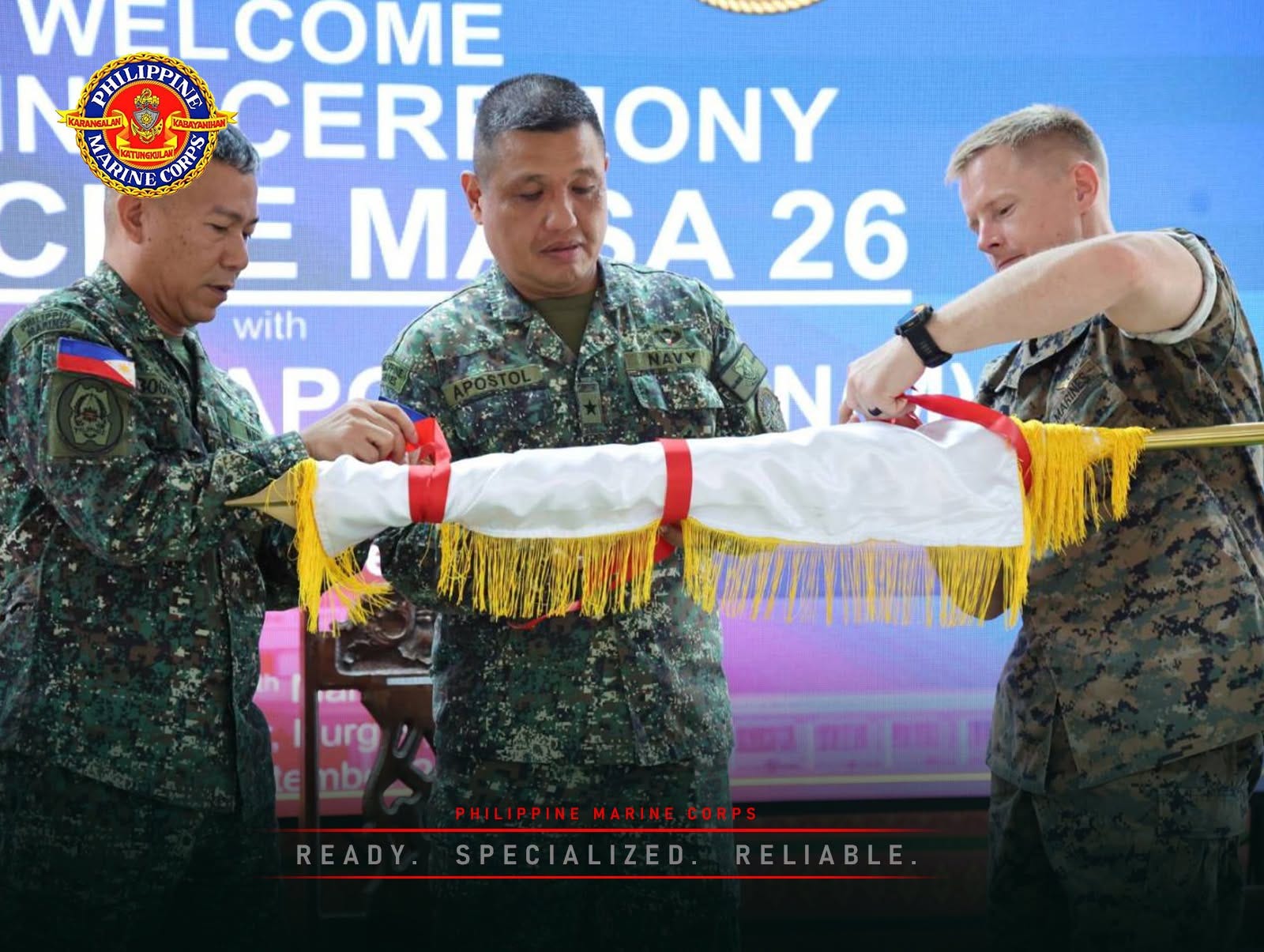
Marine Brigadier General Bob Apostol, commander of the Philippines’ 4th Marine Brigade, emphasized the importance of translating training lessons into operational performance.
“Success is not measured only by the activities we completed, but by what our forces can now do better when the real mission comes,” Apostol said at the closing ceremony of Exercise Maritime and Aviation Support Activity (MASA) 2026 in Camp Cape Bojeador, Ilocos Norte.
The 11-day joint Philippine-United States Marine exercises strengthened operational readiness, interoperability, and bilateral cooperation.
Members of the Philippine Navy, Philippine Air Force, Philippine Coast Guard, and Philippine National Police also took part in the drills.
They practiced the military’s integrated coastal defense systems, putting together land, air, maritime, and information operations. (Also read: Philippines, allies practice how to repulse amphibious assault landing)
Apostol also highlighted how Philippine and U.S. forces trained side by side, solved problems together, and strengthened the trust needed to operate as one team.
He urged participants to share what they learned with respective units and incorporate improvements into preparations for future missions.
For his part, Colonel Robert Bunn, commanding officer of Marine Rotational Force–Southeast Asia, reaffirmed the importance of the ironclad Philippines–United States alliance and the enduring partnership between their Marine forces.
He underscored the value of shared expertise and professional relationships in effective cooperation.
During the exercise, visit, board, search, and seizure training strengthened maritime security capabilities, while Constructive Maritime Strike activities enhanced coordination in detecting, identifying, and engaging simulated maritime threats.
These activities helped participating forces develop a shared understanding of the maritime environment and coordinate their responses.
There were also subject matter expert (SME) exchanges, which complemented feld training through discussions on the Android Team Awareness Kit, Explosive Ordnance Disposal, Intelligence, Medical Operations, Noncombatant Evacuation Operations and Evacuation Control Center procedures, Motor Transport, Mental Health, Floating Mine Demolition Materials, Robotics, and Communications.
Crisis Communication Management activities also strengthened participating organizations’ ability to deliver timely, accurate, and synchronized information during crises, reinforcing the role of coordinated communication in operational readiness.
Apostol said “Exercise MASA 2026” concluded with a strengthened commitment to operational readiness and the enduring Philippine–U.S. Marine partnership.
The Marine drills helped sharpen and share lessons and trust.
It also provided a stronger foundation for combined operations in support of Archipelagic Coastal Defense.
