


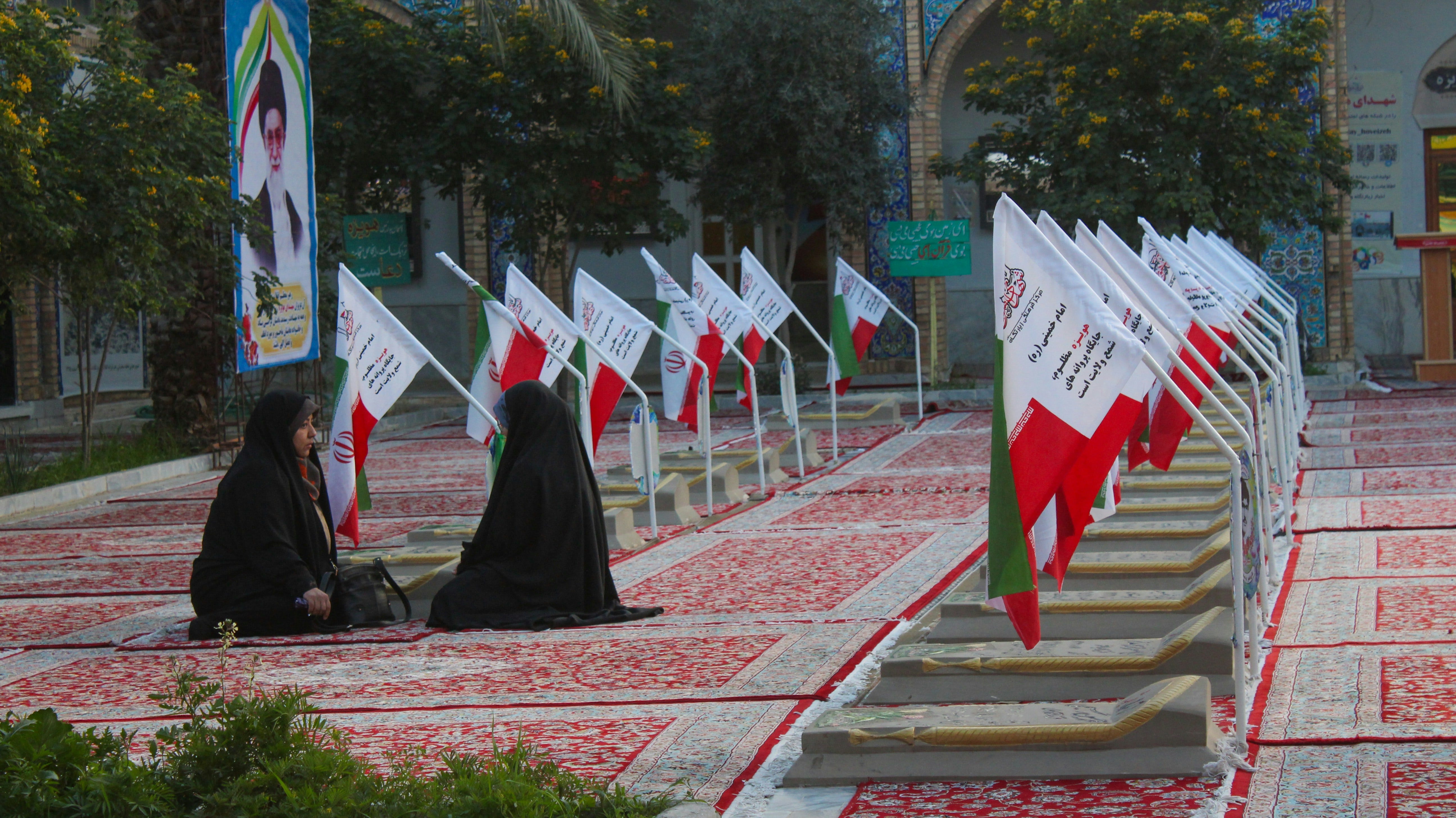
Photo by Moslem Daneshzadeh on Unsplash
Manuel Mogato | March 3, 2026
After the United States and Israel decimated Iran’s top leadership in the air strikes, will this lead to regime change to restore the monarchy?
It is too early to tell because Iran’s radical Islamic government remained in power and, under its Constitution, there is a process to succeed Ayatollah Ali Khamenei as supreme leader.
Khamenei rose to power in 1989 when he was elected by the Assembly of Experts, composed of Islamic clerics and scholars, as the successor of Ayatollah Ruholla Khomeini, who died in a hospital due to his weak heart. He has had five heart attacks.
Since the Islamic Revolution in 1979, which saw the rise of Khomeini to power, an Assembly of Experts was set up to appoint, supervise, and dismiss Iran’s supreme leader.
The members of the Assembly were mostly clerics elected directly by the people of Iran to serve for eight years. There have been eight Assemblies since 1979, led by an ayatollah, the highest rank in the Shia Muslim hierarchy.
Although the Assembly has the power to dismiss the supreme leader, it was not exercised since Ali Khamenei was elected supreme leader in 1989.
Khameini was not an ayatollah when he rose to power. He had an honorific title just below Ayatollah — Hujjat al-Islam or Hojatoleslam.
But he was bestowed the honor of grand ayatollah when he became the supreme leader, thereby easing out two others who held the ayatollah rank.
The Assembly served as a rubber stamp. The real power rests with the 12-member Guardian Council, which decides who can run for the Assembly, the parliament, and the presidency, and who actually runs the Iranian government.
Of course, the president has to obey the supreme leader’s directive.
The supreme leader handpicked half of the 12-member Guardian Council, all conservative clerics. The other half were lawyers selected by the chief justice.
Ayatollah Ali Khamenei had a tight grip on power in Iran’s political structure in his nearly four decades as supreme leader. All elected officials answered to him, and dissent was never allowed.
After Khameini’s death, a temporary council led by President Masoud Pezeshkian, Supreme Court chief justice Mohseni-Eje’i, and Ayatollah Alireza Arafi, a member of the powerful Guardian Council, will oversee the country until a new supreme leader is elected.
Several names were mentioned as potential successors, including Khamenei’s second-eldest son, Mojtaba, 56, who was seen as a frontrunner. He is also a hardliner, like his father.
However, Khameini himself discouraged his son from succeeding him, saying the leadership is not hereditary, a common practice by Iran’s monarchy until 1979.
The reformists among Iran’s clerics support the 53-year-old grandson of Khomeini, Hassan, who never served in government but is a strong voice of dissent in Iranian politics.
He has never served the government, but has strong ties to the Islamic Revolutionary Guards as the supreme leader’s son.
Hassan is the most visible among Khomeini’s 15 grandsons. He is allied with the reformists, including former presidents Mohammed Khatami and Hassan Rouhani, who both pursued policies of engagement with the West when in office.
Installing a moderate successor has gained momentum among some Iranian politicians following the massive street protests in January, which the Islamic Revolutionary Guards Corps suppressed by killing thousands.
Khameini had designated his successors last year, including his chief of staff, Ali Asghar Hejazi, who was also killed in the air strikes.
Another possible successor is Gholam-Hossein Mohseni-Eje’i, the head of Iran’s supreme court, another hardliner allied with Khameini, who served as former intelligence chief from 2005 to 2009.
Alireza Arafi, a member of the 12-member Guardian Council, has an inside track as a member of the three-member interim council tasked to run the country until a supreme leader is elected.
Arafi is a Khamenei loyalist who is seen to advance the supreme leader’s agenda.
Two other names were mentioned as potential leaders, Mohammad Mehdi Mirbagheri, who is a member of the Assembly of Experts, and
Ali Larijani, who heads the national security council. Both are loyal to Khamenei and are also conservative hardliners.
Apart from Iran’s well-entrenched clerical establishment, the monarchy also has ambitions to return to power, exploiting its ties to Western power, including the United States.
The successors of the deposed Shah of Iran have been encouraging the people to protest and take action to remove radical Islamic clerics from power in a peaceful revolution.
Only time can tell if Iran’s regime will be changed as Islamic clerics remain in power even after the US and Israel’s air strikes had wiped out Iran’s top leadership.