


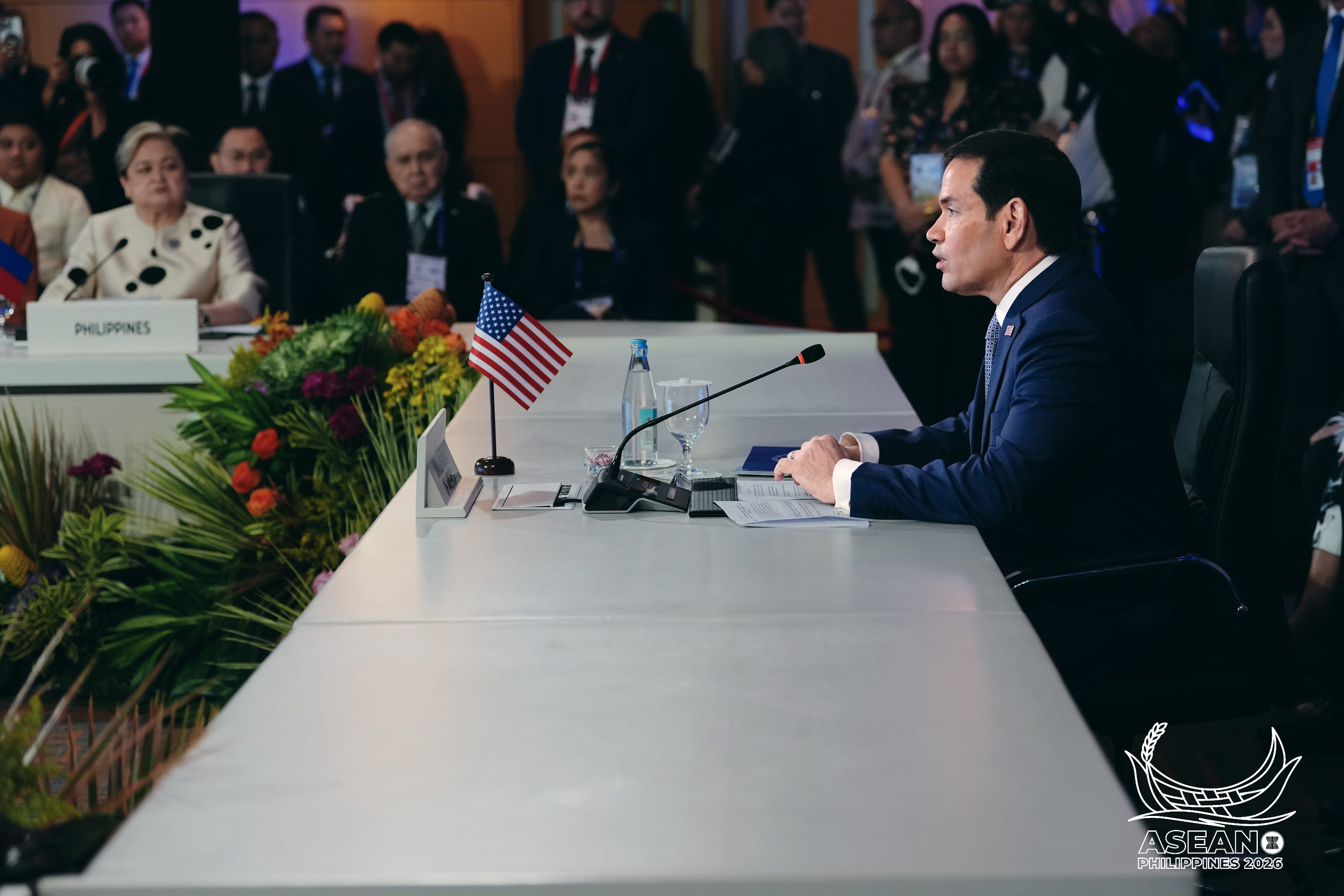
United States Secretary of State Marco Rubio during the ASEAN Post-Ministerial Conference on Wednesday, July 22. Official handout
Manuel Mogato | July 23, 2026
MANILA — United States Secretary of State Marco Rubio wanted naval assets from Asia to help Washington secure the Strait of Hormuz to ensure freedom of navigation as well as the flow of energy resources.
But Rubio made it clear the United States has not officially asked Asian allies and partners. However, he said it is in their interests to help secure the narrow straits. (Also read: US claims Iran “not serious” with peace talks)
“I think every country in the world has an interest in protecting the right of shipping in international waters and freedom of navigation,” Rubio told journalists at the sidelines of the ASEAN Ministerial Meeting in Manila.
“If you look at where that oil and you look at where that energy is destined, it’s not to the United States. It’s to other countries.”
Rubio said he acknowledged that some countries are constrained by their own laws to help secure the Strait of Hormuz.
“Some need an international flag; they need to do it under the mandate of an international organization,” he said. “Some need to go through the legislative process.”
Many navies from Asian states have capabilities to help the United States in ensuring the strait is open and free for international navigation. (Also read: Hegseth urges Asian allies to raise defense spending to 3.5 percent of GDP)
“Some of these countries have unique capabilities in terms of mine clearing and things of that nature,” he said, adding “it’d be great if they joined the effort, and I think some of them may eventually do so.”
“It’s in their interest to do so,” he added.
The US was also asking European allies to deploy naval assets to protect international shipping in the Persian Gulf, including vessels passing through the Strait of Hormuz.
About 20 percent of global energy resources pass through the narrow strait. The closure of the strait has affected oil supply and prices, forcing most Asian states to seek alternative energy sources.