
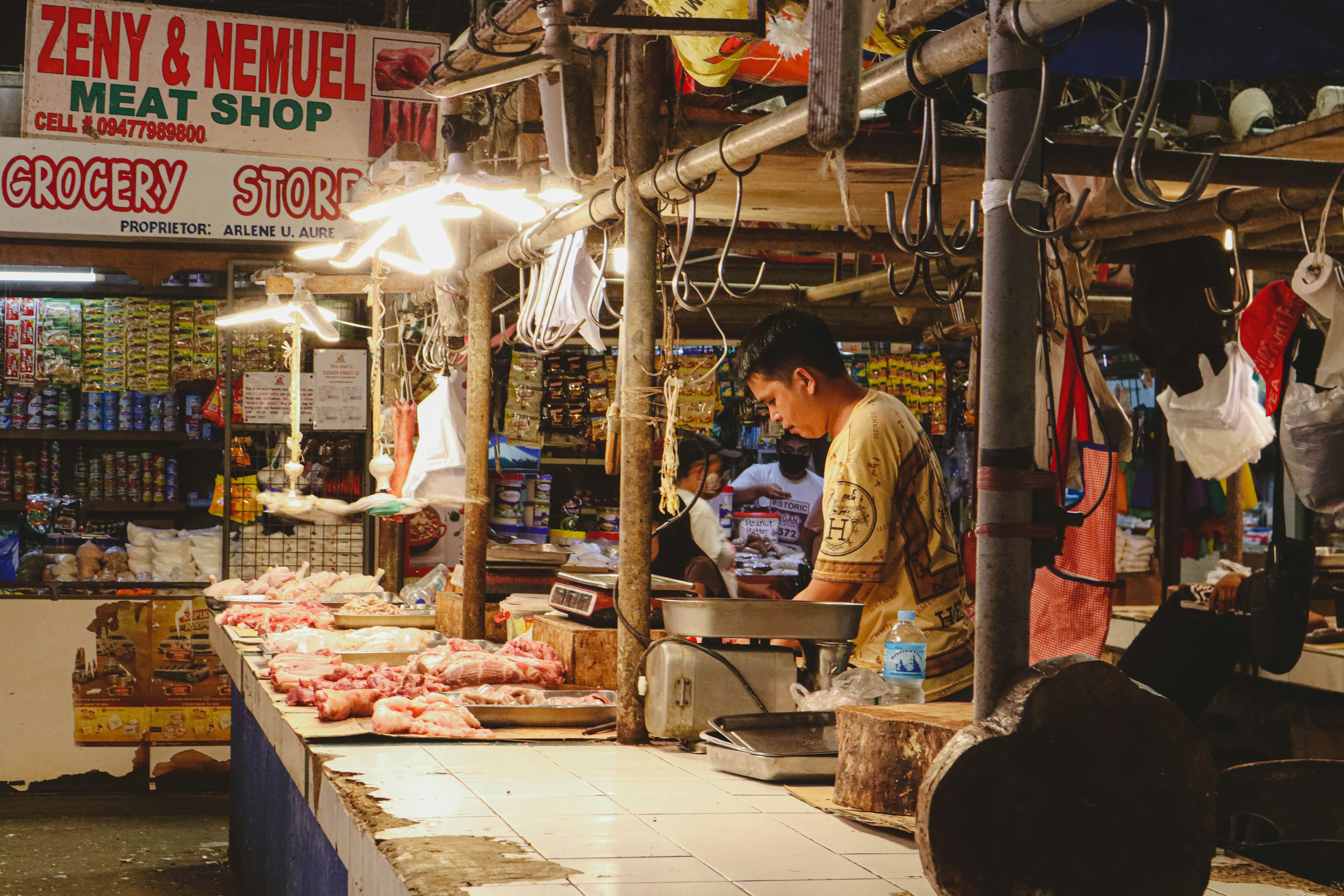
Photo by Dan Kirk Formentera on Unsplash
Stratbase Institute | March 19, 2026
Manila — Filipinos want the national government to focus on bringing down food prices, creating more jobs and eliminating corruption, according to a recent Stratbase Institute-commissioned survey released just as the conflict in Iran drove fuel prices to record-highs.
In its Feb. 27-March 2 poll conducted by Pulse Asia and released on Thursday, 41 percent of respondents said they wanted national government leaders to address “hav(ing) more affordable food prices in your area such as rice, meat, and fish.”
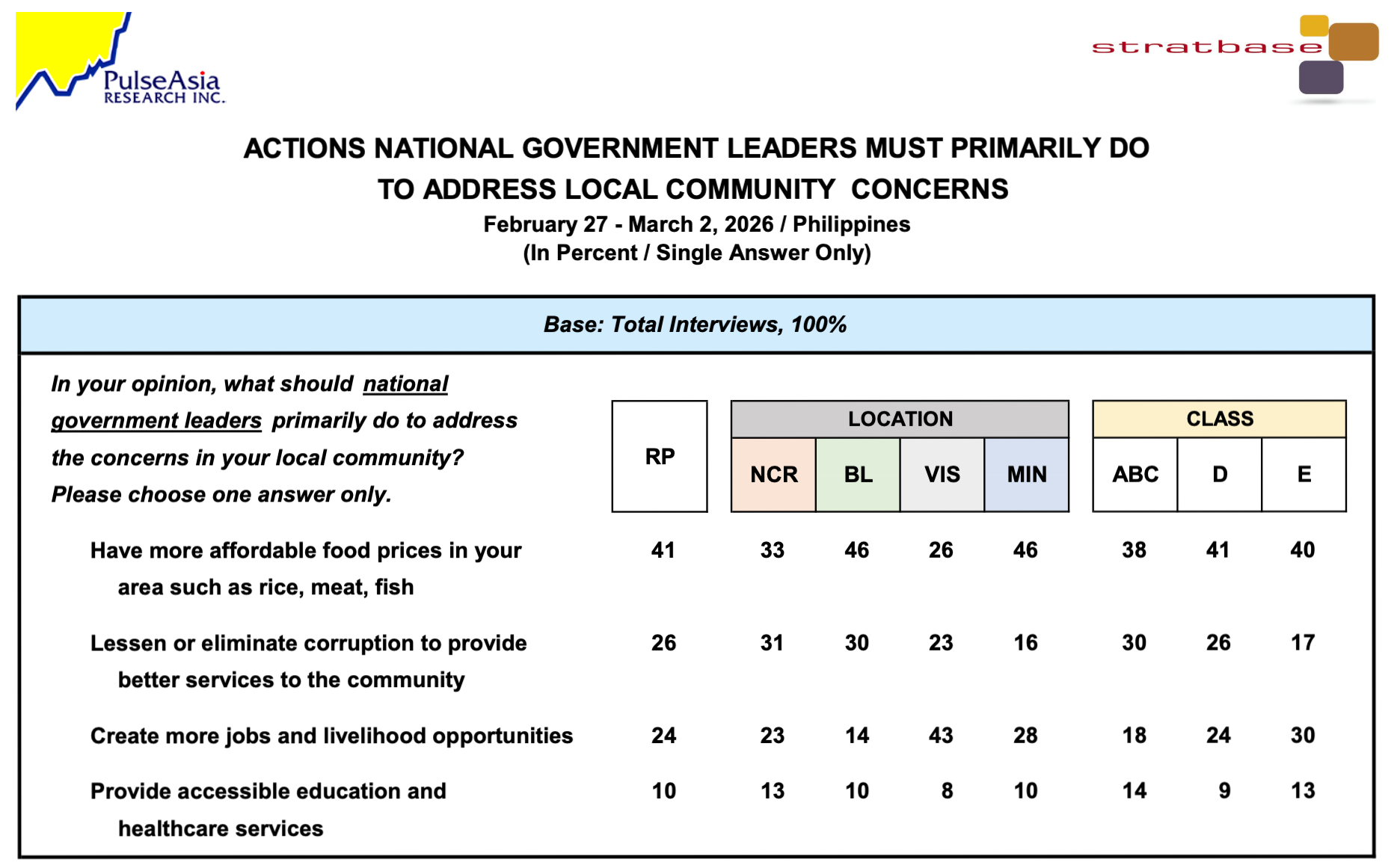
This was 3 percentage points higher compared to a similar survey conducted last December 2025, with more respondents from Balance Luzon (41 percent in December 2025 to 46 percent this March) and Mindanao (40 percent to 46 percent) echoing the sentiment.
The change was also highest among Class E respondents (+7 percentage points), from 33 percent in December to 40 percent in March.
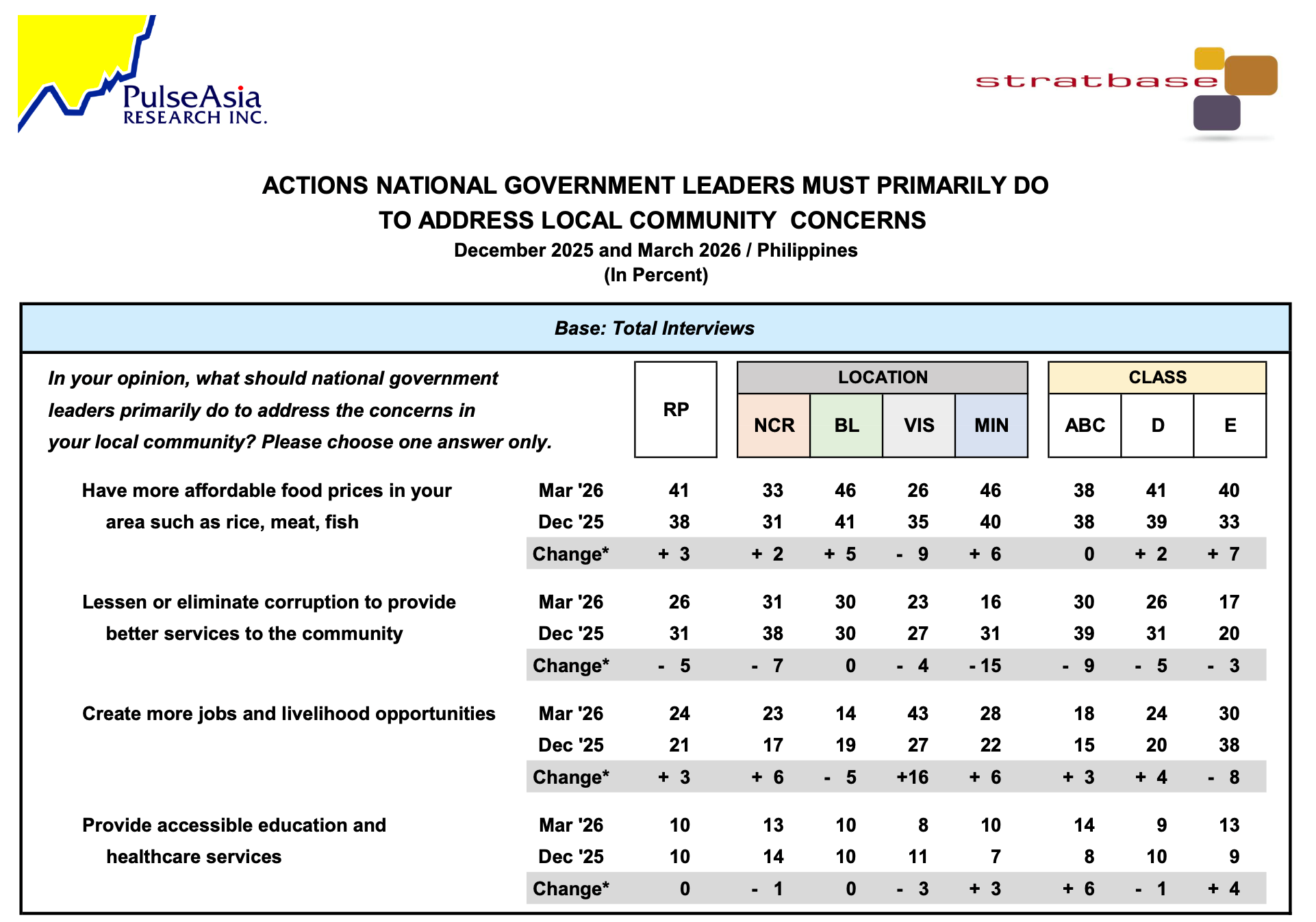
Meanwhile, 26 percent said they wanted the government to “lessen or eliminate corruption to provide better services to the community.” Notably, this was 5 percentage points lower than last survey’s 31 percent, coinciding with the winding-down of the flood control scandal investigations.
More people also now want the government to “create more jobs and livelihood opportunities,” from 21 percent in December 2025 up to 24 percent this March. This change was highest in Visayas, from 27 percent in December to 43 percent this March.
Stratbase Institute president and CEO Victor Andres “Dindo” Manhit said the findings reflected growing anxiety over food security and inflation amid the ongoing Middle East crisis, with Filipinos now paying P94 to P115 per liter following a new double-digit increase this week.
“What we are seeing is how geopolitical tensions are directly affecting Filipino households,” he said in a statement. “While corruption remains an important issue, ordinary citizens are now more focused on immediate economic pressures including food prices and income stability.”
He added that the poll results also tied with the findings of another recent Pulse Asia survey, which found inflation (47 percent) and corruption (36 percent) to be the most pressing national concerns for Filipinos and which respondents have also raised in previous national surveys.
“Our commissioned survey’s findings reinforce concerns that Filipinos are overwhelmingly worried by the rising costs of goods,” Manhit said. “That there remains a high demand to eliminate corruption also shows that the public has stronger expectations for government accountability whenever food prices rise.”
The Stratbase president urged the government to respond decisively by stabilizing food and gas prices, cracking down on profiteers, and expanding state subsidies to protect the most vulnerable sectors from further shocks.
“Addressing rising food prices must go hand in hand with creating more jobs and ensuring that economic gains are felt at the local community level,” he added.
The other concern reflected in the survey is “providing accessible education and healthcare services” (10 percent, no change from December 2025).
The survey was conducted within the same week that the United States and Israel began their coordinated strikes on Iran’s nuclear and defense facilities, prompting Tehran to close the Strait of Hormuz through which one-fifth of the world’s oil shipment passes.
The move sent oil prices soaring above $100 per barrel, while the latest price hikes on gasoline and diesel in the Philippines triggered concerns of an inflationary effect on basic goods and commodities.
The survey had a total of 1,200 respondents who were shown cards with different concerns listed. It had a ±2.8 percent margin of error.