

Stratbase Institute | November 10, 2026
The government must not allow diplomatic considerations to weaken its defense of Philippine sovereignty and must remain firm in its stance for transparency and accountability in the West Philippine Sea (WPS) amid increased tensions with China.
This according to Stratbase Institute President Victor Andres “Dindo” Manhit, who stressed that diplomatic engagement must not come at the expense of transparency and public accountability, particularly when developments in the disputed waters directly affect the country’s national security, sovereign rights and the livelihoods of Filipino communities. (Also read: Philippines rejects China’s sovereignty claim on West Philippine Sea)
“Diplomacy remains essential, but it cannot replace transparency and public accountability. There must be room for responsible public discussion, especially when developments at sea directly affect our sovereign rights, national security, and the livelihoods of Filipino communities,” he said in a statement Tuesday.
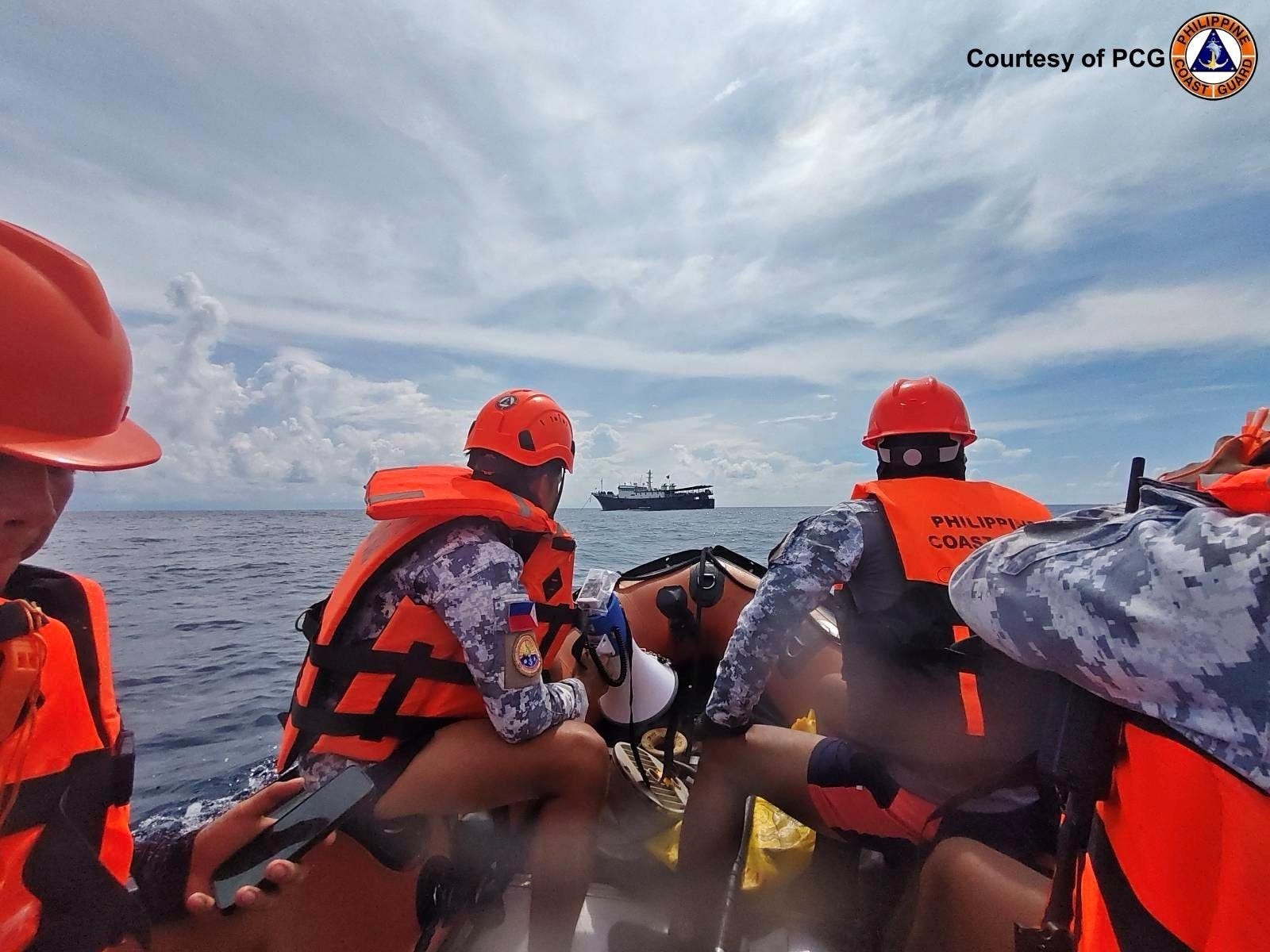
He likewise expressed support for the Armed Forces of the Philippines (AFP) and the Philippine Coast Guard (PCG) in carrying out their mandates to document and publicly report encounters with foreign vessels, as well as for government officials who actively defend Philippine sovereignty.
Manhit’s statement comes amid renewed debate over how the government should manage its relations with China while responding to its activities in the WPS.
Recent discussions have highlighted the need for government officials to align their public statements with the administration’s foreign policy and avoid undermining diplomatic efforts. (Also read: Teodoro: West Philippine Sea should unite Filipinos, not divide them politically)
But while “discretion has its place…it must never be used to suppress scrutiny or silence officials on matters of core national interest. Exposing coercion and unlawful maritime activities is a lawful defense of our rights,” he said.
He emphasized that exposing coercive actions and unlawful maritime activities is a legitimate exercise in protecting the country’s rights, not an obstacle to diplomacy.
Manhit also reiterated the need for a whole-of-nation effort in upholding the country’s interests while pursuing diplomatic solutions to maritime disputes.
Recently, diplomatic tensions between China and the Philippines have come to a head after Chinese Ambassador Jing Quan insinuated that Beijing could “easily win” a military conflict with the Philippines if it wished to assert its maritime claims.
The Philippines won the 2016 arbitral case that invalidated much of China’s sweeping claims over the South China Sea, including the West Philippine Sea.