

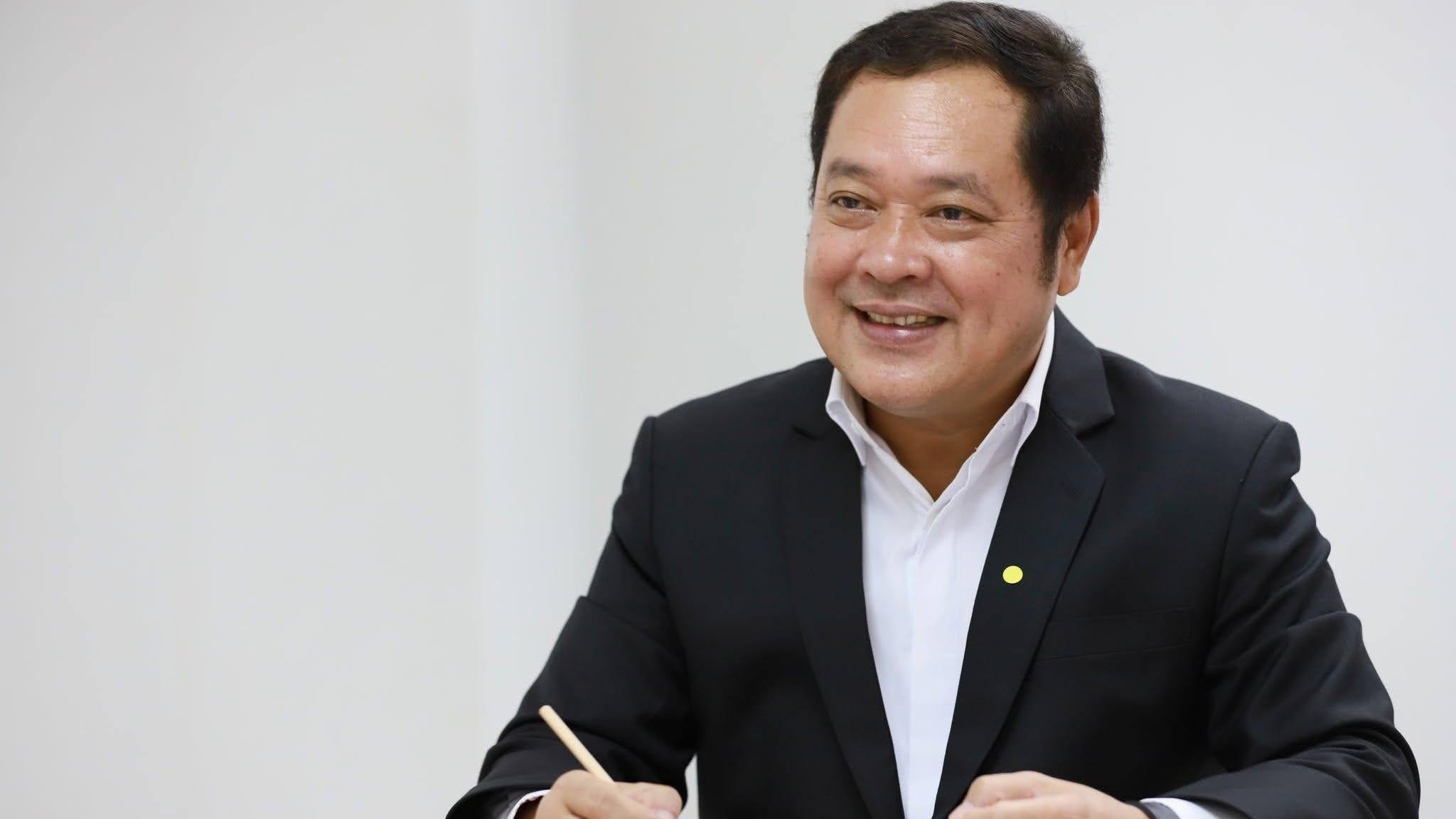
Pol. Col. Tawee Sodsong, a party-list MP and leader of the Prachachart Party (PHOTO: Tawee Sodsong - พันตำรวจเอก ทวี สอดส่อง)
Kunravee Sukhimoke | July 29, 2026
BANGKOK — Police Colonel Tawee Sodsong, a party-list MP and leader of the Prachachart Party, said alleged fraud in the 2024 Senate selection process was not merely an electoral issue, but could undermine the legitimacy of democratic checks and balances.
Thailand’s Senate consists of 200 members selected from 20 professional groups through an indirect selection process at district, provincial and national levels.
Under the Constitution, senators are required to be independent and not affiliated with political parties. The Senate also plays an important role in reviewing legislation and approving appointments to independent organisations and the Constitutional Court.
However, the outcome of the 2024 Senate selection has been questioned over allegations that networks were established to influence the results, although those accused have denied the allegations and investigations remain ongoing.
Around 147 senators, or approximately 75% of the Senate, have been referred to politically as the “Blue Senators”, based on allegations of links to the Bhumjaithai Party, whose party colour is blue.
Another group of around 30 senators has been described as “New Breed Senators” or independent senators, whose political views are seen as broadly aligned with the People’s Party.
At the time complaints over alleged Senate election collusion emerged, Tawee was serving as Justice Minister in the government of Paetongtarn Shinawatra. He pushed for the Department of Special Investigation (DSI), which handles complex and significant criminal cases, to accept the case as a special investigation before the Constitutional Court later ordered him to suspend duties related to his position.
“If I had remained in office, I would have pursued all of the cases, because this was not only about the Senate but about a systematic conspiracy. When the case became a special investigation, the secretary said there were seven groups involved, using young people in their 30s to study the Election Commission’s regulations to determine how the collusion could be carried out,” Tawee said at the second anniversary of 2024 Senate elections.
Tawee said there is a need to continue investigating the case, adding the alleged conduct was not merely cooperation among a small group of individuals but involved systematic coordination.
Meanwhile, Associate Professor Siripan Nogsuan Sawasdee, a political scientist at Chulalongkorn University, said the Election Commission (EC) could pursue three possible approaches: dismiss all complaints, prosecute all 229 individuals accused of involvement in the alleged collusion, or take action against only some of them.
“The case must be resolved before the next Senate election. There should be a new Constitution, or at least amendments to certain sections concerning the process of obtaining senators,” she said, arguing that the outcome could affect the legitimacy of the current Senate.
Freedom of Expression and SLAPP Concerns
On 21 July 2026, Yingcheep Atchanont, director of iLaw, a civil society organisation advocating civil liberties and legal reform, submitted evidence to opposition parties and disclosed the names of nine Bhumjaithai politicians whom he claimed had information linking them to the alleged Senate election collusion network. The allegations remain under review by relevant authorities.
“Among the nine ministers and MPs, the first is Anutin Charnvirakul, the current prime minister. During the 2024 Senate election, he was the deputy prime minister of the Bhumjaithai Party,” Yingcheep said.
Shortly afterwards, Anutin Charnvirakul, the prime minister and leader of the Bhumjaithai Party, responded by saying he had authorised lawyers to file a lawsuit against Yingcheep, while maintaining that accusations against individuals must be supported by clear evidence.
On 26 July 2026, Tawee said that Yingcheep’s disclosure of information, along with testimony from other witnesses regarding the alleged Senate collusion, represented an exercise of political freedom of expression and an important form of public participation in monitoring the use of state power.
Tawee said that if the government believed the allegations were false, it should explain the facts and prove its position through legal processes rather than pursuing legal action against members of the public, which could further deepen political tensions. (Also read: Thailand’s Amnesty Bill Offers Relief to Eligible Political Defendants and Activists)
He also warned that legal action against citizens in such circumstances could be viewed as an attempt to suppress public-interest criticism through legal mechanisms, or a “Strategic Lawsuit Against Public Participation” (SLAPP).
The term refers to the use of legal proceedings to intimidate, burden, or pressure individuals who engage in public debate, such as filing cases in locations that create additional difficulties for defendants, potentially affecting freedom of expression.