


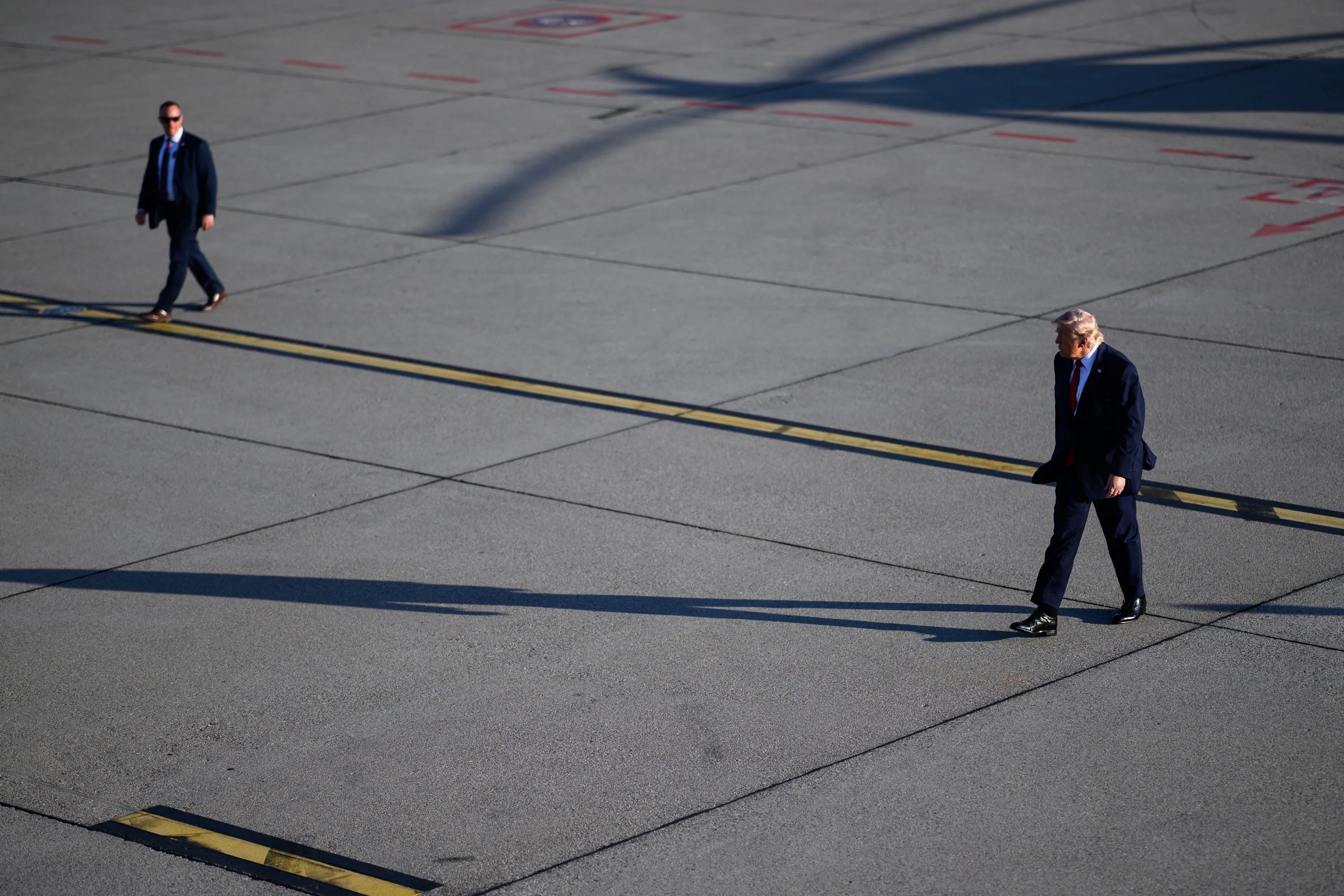
President Donald Trump during his state visit to China in June. Official Handout.
By Rodney J. Jaleco | June 30, 2026
WASHINGTON, D.C.— Washington has already begun imagining a post-Trump universe even as the president, not quite yet a lameduck with more than two years left in his 2nd term, faces pushback from a growing number of Republican lawmakers, as well as widespread dissatisfaction over the Iran war, rising prices and repeated setbacks in the courts.
The often narcissistic Pres. Trump cannot seem to shake off recent embarrassments, from having his name removed from the Kennedy Center facade to the losing battle with algae at the Lincoln Memorial Reflecting Pool.
A lunch with Republican senators on Wednesday reportedly degenerated into a shouting match between Trump and Sen. Bill Cassidy (Louisiana). The animosity apparently stemmed from the president’s refusal to sign a bipartisan housing bill — that Cassidy and three other Republicans voted for — which they hoped would boost their prospects in November’s midterms. (Also read: Assessing the US under Donald Trump)
The President reportedly berated his audience for voting to approve a non-binding war powers resolution that seeks to block further US military action in Iran.
The Iran war, especially how Trump agreed to end the fiasco, has angered many Republicans. Many Democrats also see the Iran conflict as politically damaging for Trump, drawing parallels to how the Iraq War hurt Republicans in the 2000s. They expect war fatigue, higher energy prices, and concerns about military costs to shape future elections. (Also read: Iran is Turning Out to be Another Vietnam but Worse)

Polling suggests that only a minority of Americans believe the Iran war was worth its costs. A recent Reuters/Ipsos survey found Trump’s approval rating at 34 percent tied for the lowest point of his 2nd term, while most respondents doubted that the Iran peace agreement would produce lasting stability. (Also read: Trump tries to mold US military to his image)
High prices remain a major political vulnerability. Analysts note that many voters are more focused on inflation, housing costs, and other “kitchen table” issues than on foreign policy achievements. Some Republican strategists worry that the administration’s focus on Iran has distracted from economic concerns that helped elect Trump.
The midterms map — traditionally unfavorable for the incumbent party — is looking increasingly difficult for the GOP. Many congressional Republicans were banking on Trump’s grassroots draw and willingness to use the powers of the White House to improve their chances, despite headwinds from different sources.
However, the administration has faced a series of legal challenges, with courts blocking or delaying some executive actions. These judicial battles have reinforced perceptions in Washington that Trump’s agenda faces significant institutional constraints. (Also read: The price of doing business with Trump’s America
Historically, the president’s party often loses seats in midterm elections. With Trump’s approval ratings under pressure and Republican lawmakers defending difficult Senate and House seats, many politicians, donors, and interest groups are already positioning themselves for a future in which Trump’s influence may be reduced after the 2026 midterms or at the end of his term.
Presidents often become less influential as their term progresses, but Trump nonetheless continues to dominate Republican politics, shape the party’s agenda, and command a loyal base.
Democratic strategists view the 2026 midterms as their most realistic path back to power. With Republicans facing internal disagreements over foreign policy and governance, Democrats see opportunities to regain the House and possibly challenge for the Senate.
The tension in Washington is that two realities can coexist: Trump remains the central figure in American politics today, while politicians and institutions are simultaneously preparing for the period after his presidency ends. On the other hand, the Democrats’ vision of a post-Trump scenario is not just “Trump gone,” but a political environment in which economic issues dominate, the Iran war fades or ends, congressional power is strengthened and Democrats have a chance to rebuild a governing majority.