


COL Dencio S. Acop (Ret), PhD | September 16, 2026
The Cambridge Dictionary defines “expediency” as the “quality of doing what is convenient, useful, or advantageous for a specific situation, even if it is not morally right, fair, or principled.”
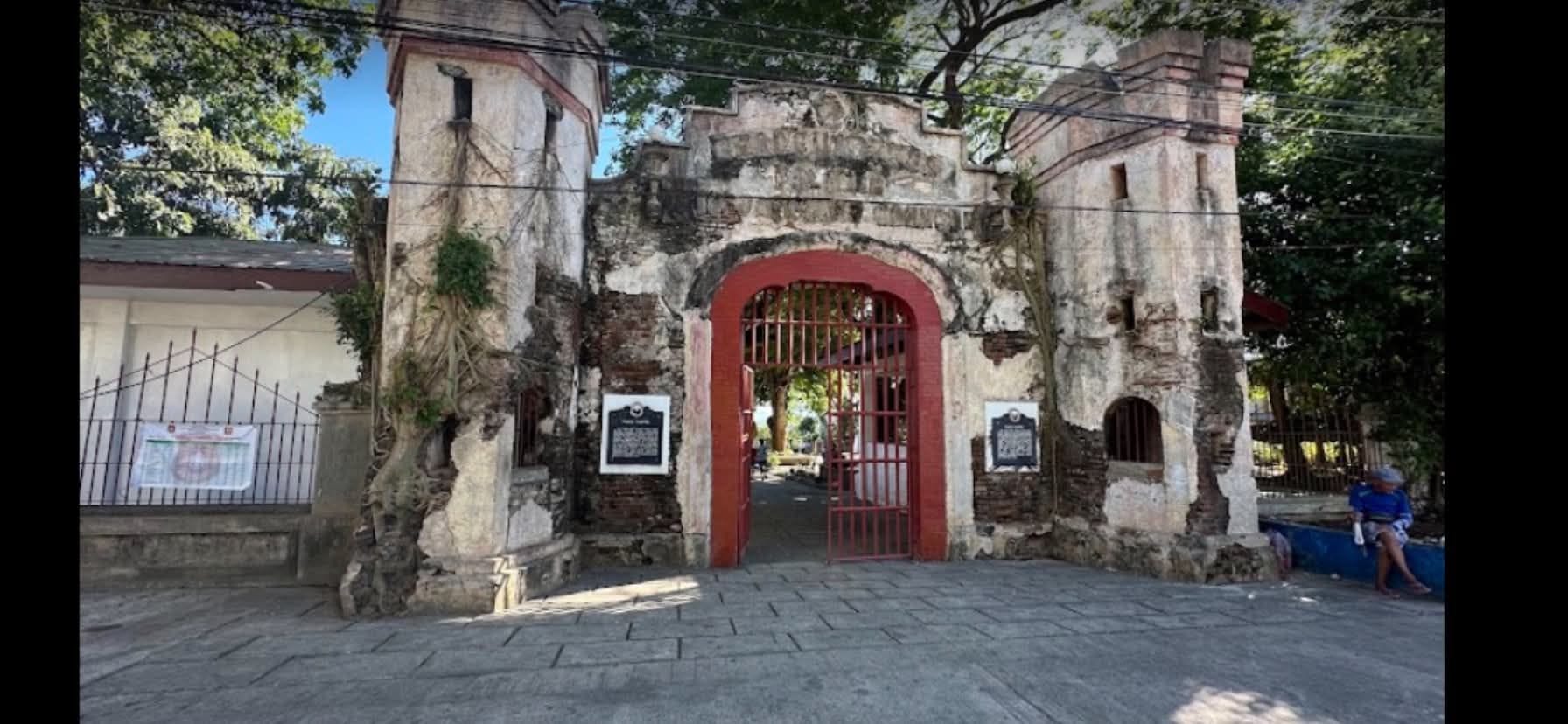
I’d say this is what’s happening in Puerto Princesa, Palawan in the Philippines where the city government is justifying its desire to turn Plaza Cuartel into an amphitheater despite the year-long protestations of concerned citizens and veteran’s groups, locally and internationally. You see, Plaza Cuartel is no ordinary plaza! It used to be Prisoner of War (POW) Camp 10-A and was the site of one of the most horrendous atrocities committed during World War II.
Originally built by Spanish colonial forces as a military garrison, the site later served as a penal colony and prison camp for American and Filipino prisoners of war by the invading Japanese Imperial Army. On December 14, 1944, Japanese soldiers burned and attempted to burn alive 150 American Prisoners-of-War whom they trapped inside the underground air-raid shelters and slit trenches of Camp 10-A, shooting down any prisoner who attempted to escape the inferno. Tortured and mistreated during the three years they were held, these prisoner-veterans of Bataan and Corregidor were made to build these trenches at the prison camp by their captors.
Then on that terrible day, they were hurriedly brought back to camp from their daily manual labor and told to enter the cramped shelters. Suddenly, the Japanese soldiers poured gasoline on the prisoners at the entrance to the shelters and lit the trenches —139 US prisoners of war were burned alive. There were 4 officers and 135 non-commissioned officers and enlisted men among them. The officers were: Lt. Cmdr. Henry C. Knight (USN Dental Corps), Capt. Fred T. Bruni Jr. (US Army), Lt. Carl Mango (US Army Medical Corps), and Warrant Officer Glen C. Turner (US Army / Services). Only 11 of these prisoners escaped and survived the carnage as they were assisted by Filipino residents and resistance fighters.
They lived to tell this inhumanity to man which prompted the Allies to include the prioritization of rescuing prisoners before they were all exterminated by the retreating Japanese Army towards the end of a war it had clearly lost.
As General Douglas MacArthur’s forces advanced through the Philippines, American commanders grew deeply alarmed by these intelligence reports. One of such operations launched was the daring raid that successfully rescued prisoners at another POW camp in Cabanatuan, Nueva Ecija. Fearing a similar “kill order” would be executed in this other camp, the U.S. Sixth Army rapidly authorized a high-staked rescue operation.
On January 30, 1945, a combined force of U.S. Army Rangers, elite Alamo Scouts, and Filipino guerrillas infiltrated 48 kilometers deep behind Japanese enemy lines and successfully liberated over 500 Allied prisoners of war who had survived the notorious 1942 Bataan Death March. The assault on the camp lasted only about 30 minutes. The combined task force achieved total tactical surprise, eliminating over 500 Japanese soldiers and destroying heavy enemy armor while losing only two Rangers in the fighting.
An aerial deception just prior to the raid, roadblocks, a critical defensive perimeter, and holding off thousands of approaching Japanese reinforcements all contributed to the successful raid. The Rangers were led by Lieutenant Colonel Henry Mucci and Captain Robert Prince while the Filipino guerrillas were led by Captains Juan Pajota and Eduardo Joson.
Wikipedia defines “amphitheater” as an “open-air venue with sloping seating used for entertainment, performances, and sports.” Other dictionaries basically give a similar definition. The description reminds us of the Roman gladiatorial arenas which featured combat between captives on death row and the beheading of Christian martyrs for the amusement of the emperor and bored city dwellers.
Puerto Princesa Councilor Robert Damasco reacted to the appeal to reconsider the building of an amphitheater over the “hallowed ground” by saying that the planned amphitheater is not a concert venue or “commercial entertainment facility” but an open-space landscape development for education and reflection.
But isn’t Plaza Cuartel as it is now already an outdoor public memorial precisely for that — education and reflection? Damasco went on to explain that it is the city government’s intent to have a modern, expanded space for “commemorative activities, cultural programs, historical tours, and educational activities” which will even “accentuate the history of the locale.”
Despite the councilor’s careful attempt to skirt the issue of the planned renovation project being an “entertainment” space, the more it sounded like it was.
By saying further that “whether the development would disrespect the site would depend on how the facility is used”, Damasco only added fuel to the fire of anxiety felt by stakeholders begging the city to reconsider its planned “desecration” of the hallowed ground in favor of commercial profits and amusements. It sounded like a cop-out, that when city officials like him are no longer in office, they would no longer be held responsible and accountable for what others after them might use the venue for, which could include commercial uses.
Another defense Damasco, who spoke for the planned project on behalf of the city, threw at the authors of signed letters from the American Defenders of Bataan and Corregidor Memorial Society (ADBCMS) and the Pacific Atrocities Education Institute (PAEI) addressed to the city mayor was that “amphitheaters have been built at historical sites in the United States.”
Even if his claim is true, building the same over a hallowed ground such as Camp 10-A / Plaza Cuartel is not the same and such statements appear to marginalize the significance of the place not just for Americans but Filipinos as well. Both Americans and Filipinos fought and died for the same freedom in World War II now enjoyed by all, including Damasco and the city council.
Damasco also claimed that ADBCMS President Jan Thompson’s group “did not consult (Puerto Princesa Mayor) Bayron about the plan or officially send the letter to him” instead of posting it on social media. But fact is that veteran’s groups and survivor families have made known their opposition to the planned city project soon after they learned about it. In his letter to the city leadership, Lt. Col. Donald Allgrove (USA, Ret.), a veteran who now lives in Palawan, wrote that: “When made aware of the city’s proposal US veterans living in the city immediately mobilized, expressed their opposition, and suggested alternate courses of action (museum, eternity flame, infinity pool, proper restoration of the former camp grounds, etc.). Seemingly positive discussions had been ongoing with city officials for more than a year.”
Unfortunately, these discussions recently ended, and the city officials still seem “hell-bent on erecting an amphitheater and defacing this solemn memorial.”
It was only after the city officials terminated their discussions with the concerned stakeholders that the latter expanded their petition to include other stakeholders to make their determined voices heard. Thus, a “1000 Letter of Opposition Campaign” was waged by all concerned stakeholders which now includes, besides the ADBCMS and PAEI, the West Point Society of the Philippines, MacArthur Society, Army Football, Stephen Moore, Austin Weishel (Honorable Sculptures), Rene Burgess (Core Government Services), Frank Demith (West Point ’83), Chris and Fili Pacheco (PLUMA Construction), and survivor families like Anita Smith Alexander.
By all indicators, the fear of veterans and survivor families that the solemn Plaza Cuartel will eventually be turned into a circus seems well-founded. Just listening to the words of the detailed explanation by Councilor Damasco in his privilege speech betrays this imminent probability: “Instead of citing the impending project as a disrespect, it should be seen as a living monument which will link the past and present generations. By building an amphitheater, we are giving this city space the opportunity to be a center of education, arts, and culture. An expanded and modern facility such as the planned amphitheater will invite more locals and tourists to hang out longer in the place.”
Towards the purveyors of opposition, the city officials managed to divert the focus away from the merits of the objection turning them into demerits by claiming that the posted face book posts instead of sending directly to the city mayor was by itself ‘disrespectful’.”
As earlier cited, the social media posts were only resorted to after the city government stopped listening to concerned veterans and survivor families.
Meanwhile, this is all happening at a time when the Philippines needs the support of the United States against Chinese aggression in the West Philippine Sea. Already, US presence is felt throughout the archipelago in nine EDCA sites playing strategic and tactical roles. So, let me ask this question. Is this how we want to play the hand of a valued ally in the face of a powerful regional enemy? Puerto Princesa lies near the West Philippine Sea and must be feeling the heat of Chinese aggression. Is a local amphitheater worth the cost of national security? The rational answer seems clear right out of the diplomatic playbook. Surely, even a city like Puerto Princesa must know this if only to ably defend itself when such a time comes.
According to City Information Officer Glaiza Kay Vicente-Moncatar, “a group of American veterans and officials from the Joint United States Military Advisory Group (JUSMAG) Philippines are coordinating with the Puerto Princesa City government” on the issue.
Local citizens and media in Palawan have also expressed their views on the matter. Reacting to the issue as reported by Palawan News, concerned citizens have practically rung the corruption alarm bell regarding the report. One commenter said “there is already the Mendoza Park amphitheater; Why do we need a second amphitheater? What is it for?” Another commenter said that he’d seen enough of the city, as a resident, to know that “there is no piece of history in Puerto Princesa that has been cared for and preserved; Everything has been overturned and touched in the name of greed and it is just so sad.”
While the quantity and speed of public projects authored by a public official seem commendable, there is also a flipside to that coin and one in which endemic graft and corruption play a notorious part, especially in the Philippines. Usually, the quality of public programs and projects in the Philippines has suffered due to this endemic corruption.
Corruption in the Philippines is widely considered a severe and pervasive issue. Transparency International Corruption Perceptions Index scored the Philippines 32 out of 100, ranking it 120th out of 182 countries, or in the bottom 65%. Corruption cost the Philippine economy an estimated PhP8.8 trillion over the past decade. According to Pulse Asia, 94% of Filipinos believe that government corruption is widespread. And infrastructure projects are the number one source and enabler of corruption in the country, which explains why the Department of Public Works and Highways is among the top three government bodies frequently labeled as most corrupt. The recent multibillion peso flood control scam is a prime example. Institutionalized “cuts” of 2% to 3.5% across DPWH tiers, captured as “administrative expenses” in audits, were in fact public monies pocketed by public officials. Executive budgets submitted for funding are overblown to cover these cuts.
In one instance in 2014, “three residents of Puerto Princesa filed graft charges against a local government official for allegedly accumulating unexplained wealth”, as reported by the Philippine Star. In 2013, an anti-corruption watchdog, ZeroTolerance.org, filed graft charges, which amounted to plunder, against the same government official “over a supposed purchase of heavy equipment worth PhP263.2 million, as reported by the Manila Standard.
In December 2016, Ombudsman Conchita Carpio-Morales even “ordered the dismissal from the service and perpetual disqualification from holding public office” of the same official “for administrative offenses of serious dishonesty and grave misconduct”, as reported by the Philippine Star. However, despite these past serious accusations, the local government official has managed to remain in office.
It is in the twilight of our years that we can discern more clearly which seems right and what seems wrong. In this article, we have tried to echo the appeal of military veterans (myself, included) and their surviving families to continue honoring the memory of those who paid the ultimate sacrifice of their lives for the freedom we enjoy today.
While it has been so long since the day of their martyrdom and the present generations of today may no longer appreciate that sacrifice, still it happened and we owe it to them and ourselves to do the right thing today; Lest we forget.
The freedom those 139 soldiers died brutally for in 1944 is the same freedom we are again defending today in the face of China’s aggression in the region. We pray that developments may not spiral down to war which we all abhor. It is in these times that we should never forget memorials such as POW Camp 10-A, or Plaza Cuartel. For it rekindles the bond of brotherhood Filipino blood shares with its allies toward defending the homeland and all loved ones therein.
We and our American allies are a band of brothers, and we shouldn’t allow petty materialism to get in the way of that intangible spirit and its power to unite especially at a desperate and unforgiving time.

Col. Dennis, you didn't mention that you're a graduate of the United States Military Academy at West Point, too, like the Numero Uno West Pointer in PH the late President Fidel V. Ramos.