

Rommel C. Banlaoi |September 17, 2026
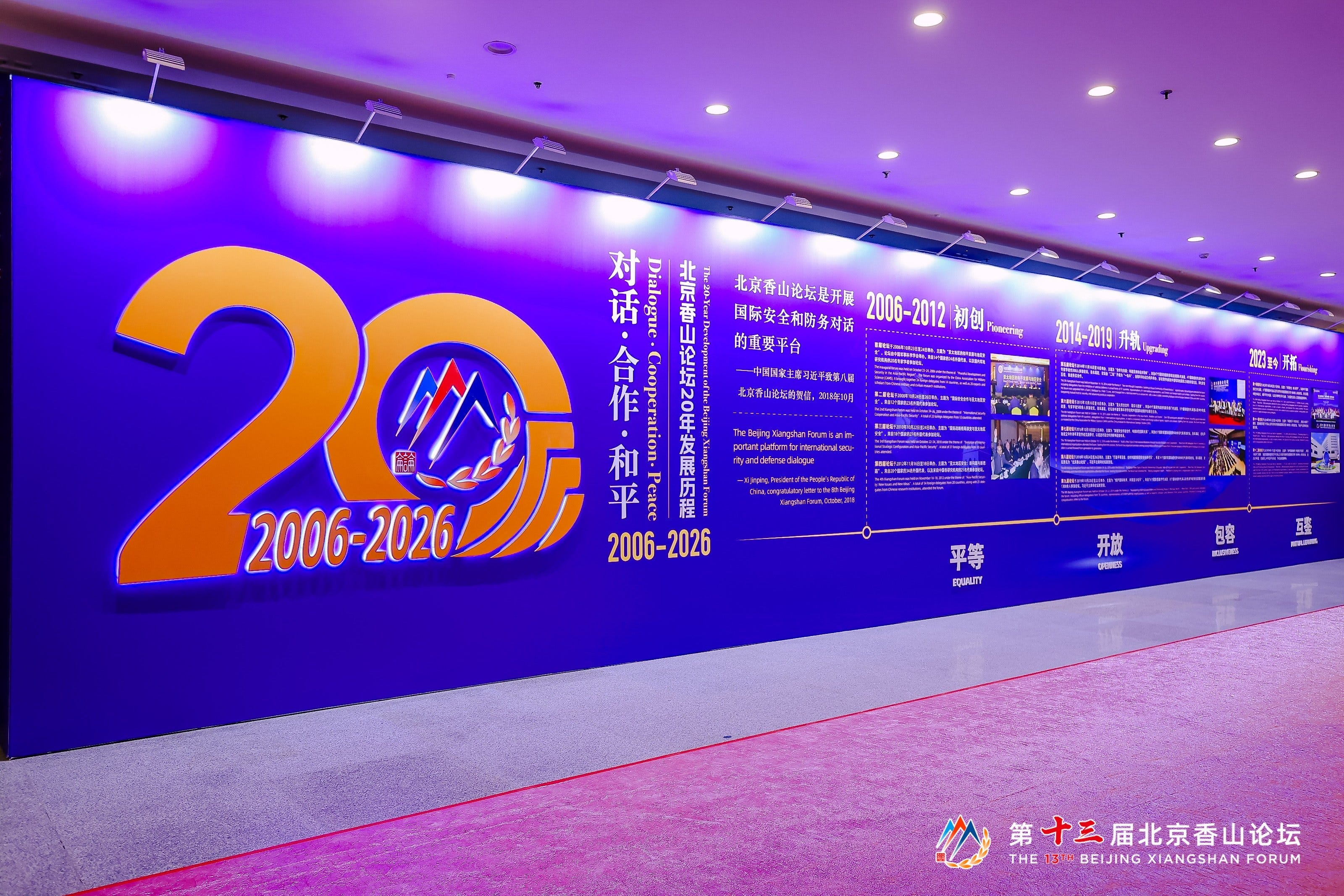
On 15–17 September 2026, the Beijing Xiangshan Forum celebrated its 20th anniversary, convening nearly 200 experts, scholars, and defense officials from close to 100 countries, with total participation exceeding 2,000 delegates. Yet, amid persistent South China Sea disputes, the Philippines opted to remain absent from China’s premier annual defense dialogue.
This decision is a serious strategic misstep. By staying away, Manila forfeits a vital platform to assert its interests, clarify its policies, and engage with regional counterparts who are actively shaping Asia’s security architecture.
The Xiangshan Forum is no minor gathering. It convenes defense ministers, senior military officials, and scholars from across the globe. While the ShangriLa Dialogue in Singapore remains the marquee event for defense diplomacy in the AsiaPacific, Xiangshan has steadily broadened its reach—drawing participants not only from Asia but also from Western and Eastern Europe, Latin America, Africa, and Central Asia. Its growing influence is particularly evident among states seeking to balance Western and Asian perspectives in shaping the global security discourse. (Also read: Hegseth’s Burden-Sharing and Manila’s Balancing Act with Washington and Beijing)
Although the Philippines remains active in other defense forums, its absence from the Xiangshan Forum conveys a troubling signal of disengagement precisely when maritime tensions with China demand sustained and proactive diplomacy to deescalate current tensions.
What is lost by non‑attendance?
First, the ability to directly communicate Philippine concerns in a multilateral setting where Chinese officials are present and listening. The South China Sea disputes affect Filipino fishermen, naval officers, and coastal communities. Attending Xiangshan would allow Manila to raise these issues in a professional, diplomatic environment, rather than leaving them to confrontational exchanges or media soundbites.
Second, the Philippines misses the chance to build coalitions with other middle powers. Vietnam, Indonesia, and Malaysia attend Xiangshan to ensure their voices are heard. They use the forum to exchange views, coordinate positions, and explore confidence‑building measures. By not participating, the Philippines isolates itself from these informal networks of cooperation.
Third, absence undermines Manila’s credibility as ASEAN Chair in 2026. Chairmanship requires active engagement in all relevant platforms, not selective participation. If the Philippines aspires to guide negotiations on the Code of Conduct in the South China Sea, it must demonstrate consistency in attending both ASEAN‑led and China‑led dialogues. Skipping Xiangshan weakens its claim to leadership and diminishes its ability to influence outcomes.
Fourth, the Philippines loses an avenue for defense diplomacy. Military‑to‑military communication is about preventing miscalculation. The Xiangshan Forum complements the ASEAN Defense Ministers’ Meeting Plus (ADMM‑Plus) by providing another venue for frank exchanges. For Manila, participation could pave the way for resuming the Philippines–China Annual Defense and Security Talks, which remain suspended. Without such channels, the risk of misunderstanding in contested waters grows, and the potential for escalation increases.
Critics may argue that attending Xiangshan legitimizes China’s narrative or exposes the Philippines to propaganda. This concern is valid but manageable. Engagement does not mean endorsement. Participation allows Manila to challenge narratives directly, present evidence, and assert its positions with clarity. Walking away leaves the field uncontested. In diplomacy, presence is power.
Most importantly, mutual respect must be the guiding principle of Philippine–China defense diplomacy. Respect for sovereignty, respect for legitimate interests, and respect for differences are the prerequisites for building mutual trust. Without trust, every negotiation risks becoming a zero‑sum contest. With trust, dialogue can open pathways to cooperation even amid disputes. The Xiangshan Forum provides a venue where this respect can be demonstrated, tested, and strengthened. (Also read: Pragmatic Nationalism: A Philippine Foreign and Security Policy Framework)
The Philippines defense establishment must therefore recalibrate its stance. Attendance at Xiangshan should be viewed as an opportunity to defend national interests, strengthen regional partnerships, and demonstrate leadership. The Philippines gains nothing by staying away.
The DND should send a high‑level delegation to the next Xiangshan Forum, with instructions to engage constructively but firmly. Philippine representatives must articulate the country’s positions on maritime security, domain awareness, and ocean governance. They should encourage dialogue on crisis management mechanisms and confidence‑building measures. Most importantly, they should signal Manila’s readiness to resume bilateral defense talks with Beijing, while insisting on respect for international law and Philippine sovereignty.
Defense diplomacy safeguards national security through dialogue and cooperation. By reengaging with the Xiangshan Forum, the Philippines can ensure its voice resonates in this critical platform.
Rommel C. Banlaoi, PhD, is Director of the Philippines–China Studies Center at Diliman College, President of the Philippine Society for International Security Studies and former President of the Philippine Association for Chinese Studies.